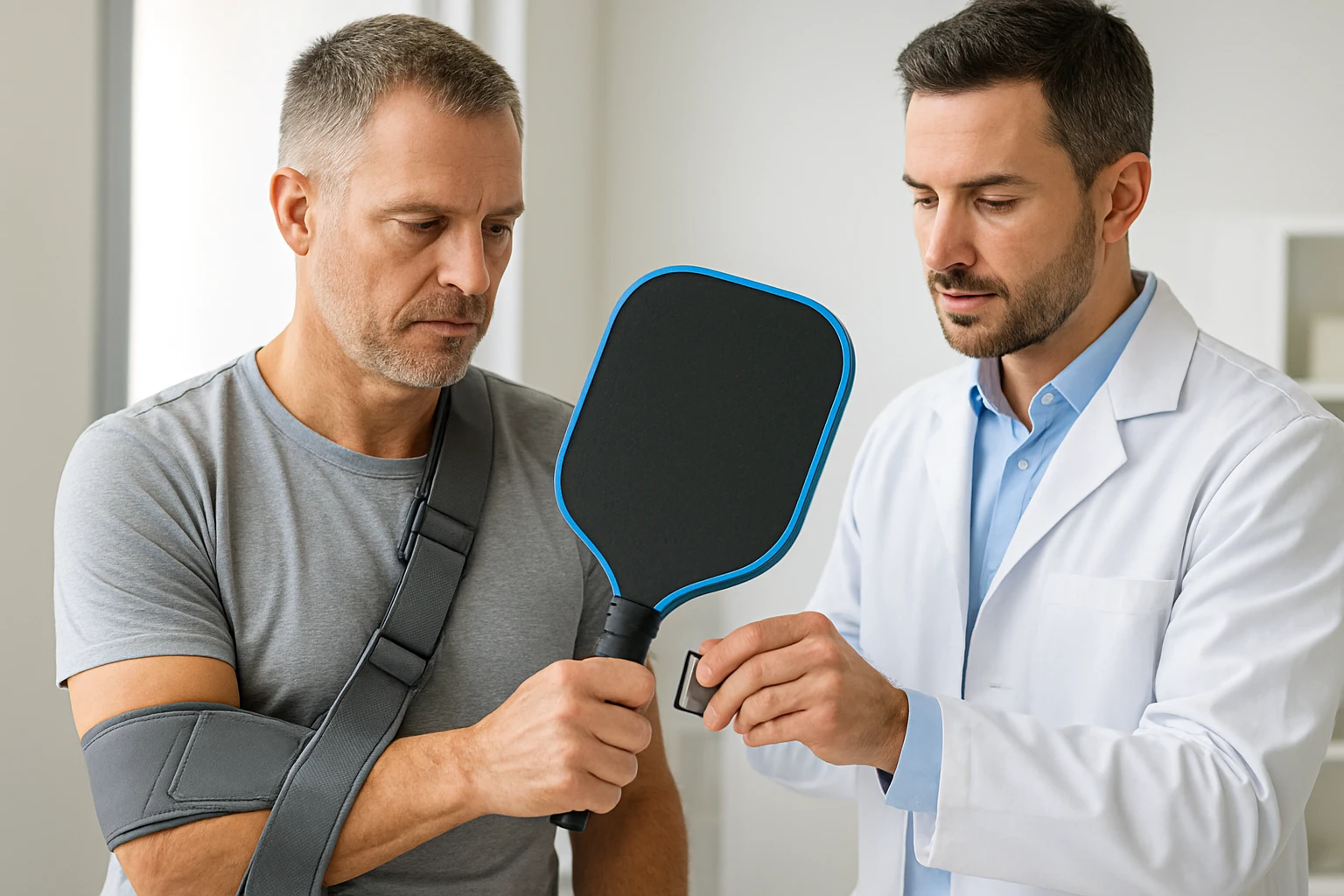
Adjust Paddle Weight After Shoulder Surgery
Introduction
Shoulder surgery can disrupt a player’s ability to enjoy pickleball, especially when the weight of a paddle creates excessive strain. This guide explains how to evaluate paddle weight, select appropriate equipment, and progress safely back to competitive play. Readers will learn the biomechanics of shoulder movement, rehabilitation milestones, and product options that support a gradual return. The information combines clinical insight with practical recommendations for intermediate players who seek a structured comeback.
Background and Context
The shoulder joint is a complex ball‑and‑socket structure that relies on rotator‑cuff muscles, the deltoid, and the scapular stabilizers to generate power. After surgical repair, tissue healing typically follows a phased protocol: immobilization, passive range of motion, active strengthening, and functional training. During the early phases, reducing external load is essential to avoid re‑injury. Paddle weight directly influences the torque applied to the glenohumeral joint; a lighter paddle reduces muscular demand while still allowing skill development.
Pickleball paddles are constructed from a variety of materials, including fiberglass, carbon fiber, and composite cores. Each material contributes to overall mass, balance point, and vibration dampening. Understanding these characteristics enables the player to choose a paddle that aligns with postoperative strength levels. In addition, grip size and texture affect forearm muscle activation, which can be critical during the rehabilitation period.
Assessing Your Shoulder Readiness
Before modifying equipment, the player should obtain clearance from a qualified orthopedic surgeon or physical therapist. The clinician will evaluate pain levels, range of motion, and muscular endurance using standardized tests such as the Apley scratch test and resisted external rotation. A common benchmark for returning to light paddle work is the ability to perform 15 repetitions of resisted external rotation at 5 kg without pain. Once this threshold is met, the athlete can begin experimenting with paddle weight.
It is advisable to start with a paddle that weighs less than the pre‑surgery average. For most recreational players, a paddle weight between 7.0 oz and 8.0 oz provides a manageable load while preserving control. The player should monitor shoulder discomfort during short practice sessions, noting any increase in pain or swelling. If symptoms arise, the weight should be reduced further, or the session should be shortened.
Key Concepts for Paddle Weight Adjustment
- Mass Distribution: A paddle with a head‑heavy balance creates higher torque at the shoulder; a balanced or handle‑heavy paddle reduces this effect.
- Core Material: Honeycomb cores (polypropylene or PP) absorb vibration better than solid cores, decreasing muscular fatigue.
- Grip Size: An appropriately sized grip minimizes forearm pronation effort, which is especially important when the rotator cuff is healing.
- Surface Texture: Rougher surfaces increase spin but may require more swing speed; smoother surfaces allow a lighter swing.
These concepts guide the selection of products that support a safe return to play.
Product Recommendations
The following paddles have been chosen because they embody the principles described above. Each product includes specific features, user ratings, and price points that make it suitable for post‑surgical athletes.
Lightweight Option for Early Return
The Dulce DOM Pickleball Set provides a versatile solution with four paddles that weigh approximately 10.58 oz each, but the set includes a lightweight fiberglass option that can be selected for early rehab. The paddles feature a 9‑ply hard basswood core reinforced with rubber edges, offering durability without excessive mass. The included shock‑absorbing grip contains ventilation holes that reduce slippage and lessen impact on the hand. With a rating of 4.6 out of 5 from 2,819 reviewers, the set balances quality and affordability at $39.99.
Carbon‑Fiber Choice for Controlled Spin
For players who progress to moderate strength, the CZRR Carbon Fiber Paddle offers a 3K raw carbon fiber surface that enhances spin while maintaining a weight range of 8.0‑8.5 oz. The 16 mm polypropylene honeycomb core reduces vibration, making it comfortable for longer rallies. The paddle is USAPA approved, ensuring tournament‑level performance once the shoulder is fully healed. Users praise the soft artificial‑leather grip with sweat‑wicking holes, and the paddle is priced at $29.99 with a 4.6 rating from 885 reviews.
Premium Ultra‑Light Option
When the athlete reaches a high level of confidence, the Jojolemon Carbon Paddle delivers an ultra‑light design weighing only 7.9‑8.2 oz. The Toray T700SC carbon fiber construction provides exceptional rigidity, while the Teflon coating increases durability and spin control. The grip circumference of 4.25 inches and length of 5.2 inches fit most adult hands, and the paddle’s rating of 4.8 from 1,472 reviewers reflects its premium status. The price of $99.69 reflects the advanced materials and USAPA approval.
Value Set for Family Play
The JoncAye Pickleball Set includes four fiberglass paddles, each weighing around 8 oz, and a comprehensive accessory kit. The composite PP honeycomb core produces less noise than traditional Nomex cores, which can be advantageous for patients sensitive to vibration. The set’s cushioned, perforated grip and extra grip tapes allow the player to replace worn grips without additional expense. With a 4.7 rating from 6,326 reviews and a price that reflects bundled value, this set is ideal for families supporting a recovering athlete.
Comparison and Selection Guide
| Feature | Dulce DOM Pickleball Set | CZRR Carbon Fiber Paddle | Jojolemon Carbon Paddle | JoncAye Pickleball Set |
|---|---|---|---|---|
| Weight (oz) | ~10.6 (standard) – lighter option available | 8.0‑8.5 | 7.9‑8.2 | 8.0 |
| Core Material | 9‑ply basswood with rubber edge | 16 mm polypropylene honeycomb | 16 mm shark‑power polymer | Composite PP honeycomb |
| Surface | Fiberglass | 3K raw carbon fiber | Toray T700SC carbon fiber with Teflon coating | Fiberglass |
| USAPA Approved | Yes | Yes | Yes | Yes |
| Price (USD) | $39.99 (set of 4 paddles + accessories) | $29.99 | $99.69 | Variable (bundle value) |
| Rating | 4.6/5 (2,819 reviews) | 4.6/5 (885 reviews) | 4.8/5 (1,472 reviews) | 4.7/5 (6,326 reviews) |
When selecting a paddle, the athlete should prioritize weight and core vibration reduction during the early phases of rehabilitation. The Dulce DOM set offers a budget‑friendly entry point with interchangeable paddles, while the CZRR paddle provides a balanced weight for the intermediate stage. The Jojolemon paddle is best suited for athletes who have regained near‑full strength and desire premium spin. The JoncAye set delivers a family‑oriented package that can be shared among multiple users, reducing the need for individual purchases.
Best Practices and Tips for a Safe Return
- Begin with a warm‑up that includes dynamic shoulder circles, scapular retractions, and light resistance band exercises to activate stabilizing muscles.
- Use a paddle that is at least 1 oz lighter than the pre‑injury model during the first four weeks of on‑court activity.
- Limit each practice session to 15‑20 minutes, focusing on controlled forehand and backhand strokes rather than powerful serves.
- Incorporate interval training: alternate 2 minutes of gentle rallying with 1 minute of rest to prevent cumulative fatigue.
- Track pain using a numeric rating scale; a score above 3 (on a 0‑10 scale) should prompt an immediate reduction in intensity.
- Progress to a slightly heavier paddle only after achieving pain‑free range of motion and the ability to perform 20 repetitions of resisted external rotation at 5 kg.
- Maintain regular communication with the physical therapist to adjust the rehabilitation plan based on functional outcomes.
Frequently Asked Questions
- Can I use my original tournament paddle immediately after surgery? No. The original paddle is typically heavier and may place excessive torque on the healing shoulder. A lighter, vibration‑dampening paddle is recommended for the initial return.
- How long should I wait before increasing paddle weight? Most clinicians advise waiting at least 8‑10 weeks post‑operation, provided that pain is minimal and strength benchmarks are met.
- Is a fiberglass paddle better than carbon fiber for recovery? Fiberglass paddles are generally lighter and produce less vibration, which can be advantageous during early rehabilitation. Carbon fiber offers superior stiffness for later stages.
- Do grip size and texture affect shoulder strain? Yes. An oversized grip forces the forearm muscles to work harder, increasing shoulder load. Selecting a grip circumference that matches the hand size reduces unnecessary strain.
- Should I replace my grip tape after surgery? Replacing worn grip tape with a fresh, sweat‑wicking grip can improve comfort and prevent the hand from slipping, thereby protecting the shoulder.
- Can I play doubles before returning to singles? Doubles play typically involves less court coverage and lower intensity, making it a suitable intermediate step once basic strength is restored.
- What signs indicate that I am ready for a full‑weight paddle? Consistent pain‑free performance of sport‑specific drills, ability to serve at full speed without discomfort, and physician clearance are strong indicators.
Conclusion
Adjusting paddle weight after shoulder surgery is a critical component of a successful return to pickleball. By understanding the relationship between mass, balance, and shoulder biomechanics, the athlete can select equipment that supports gradual strength rebuilding. The recommended paddles—Dulce DOM, CZRR, Jojolemon, and JoncAye—cover the spectrum from early‑stage light options to premium performance models. Coupled with disciplined rehabilitation, proper grip selection, and vigilant monitoring of pain, these strategies enable a safe and confident comeback to the sport.
Products Featured in This Guide
Dulce DOM Pickleball Set
Price: $39.99 | Rating: 4.6/5 (2,819 reviews)
Featured because it offers a versatile, budget‑friendly collection of paddles with shock‑absorbing grips, making it ideal for early post‑surgery use.
CZRR Carbon Fiber Paddle
Price: $29.99 | Rating: 4.6/5 (885 reviews)
Featured because its 8.0‑8.5 oz weight and honeycomb core provide a balanced transition between light rehabilitation and competitive play.
Jojolemon Carbon Paddle
Price: $99.69 | Rating: 4.8/5 (1,472 reviews)
Featured because its ultra‑light construction and premium carbon fiber surface support high‑level spin and control for fully recovered athletes.
JoncAye Pickleball Set
Rating: 4.7/5 (6,326 reviews)
Featured because it supplies a complete family kit with 8 oz fiberglass paddles, cushioned grips, and reduced‑noise cores, ideal for shared rehabilitation environments.
Frequently Asked Questions
How does paddle weight influence shoulder strain after surgery?
Heavier paddles increase torque on the glenohumeral joint, demanding more rotator‑cuff effort and risking re‑injury.
What paddle weight is recommended for the early rehabilitation phase?
A paddle weighing 6‑7 oz (170‑200 g) is typically light enough to minimize load while still allowing control.
How can I tell if a paddle is too heavy during my recovery?
If you feel excessive shoulder fatigue, pain, or loss of smooth swing within a few strokes, the paddle is likely too heavy.
Is it safe to gradually increase paddle weight, and how should I do it?
Yes; add 0.5‑1 oz (14‑28 g) every 2‑3 weeks once you can complete full range‑of‑motion drills without pain.
Are there specific paddle materials or designs that aid post‑surgery play?
Paddles with polymer cores and composite faces are lighter and absorb vibration, making them ideal for shoulder recovery.