Introduction
Pickleball paddles are valuable investments that endure frequent handling, high‑impact shots, and exposure to outdoor elements. When ultraviolet (UV) radiation penetrates the paddle surface, it can cause fading, loss of structural integrity, and eventual cracking. This guide explains ten easy steps that one can follow to prevent these problems, ensuring that the paddle remains vibrant and functional for many seasons. Readers will learn practical storage techniques, protective accessories, and maintenance habits that together create a comprehensive defense against UV damage.
Although the steps are useful for any paddle, the guide highlights specific tools that simplify the process. By following each step, one can extend the life of the paddle, maintain consistent performance, and avoid costly replacements. The information is presented in a professional tone, with clear instructions and real‑world examples that intermediate players will find actionable.
What You’ll Need
- YTYKINOY Pickleball Paddle Covers – Neoprene sleeve, 2‑pack, $11.99, 4.6/5 rating.
- SUNGOOYUE Paddle Board Tape – Transparent UV‑protective tape, 2‑pack, $33.53, 5/5 rating.
- Soft, lint‑free cloth for cleaning.
- Mild soap or dedicated paddle cleaner.
- Sturdy paddle bag or case with ventilation.
- Cool, dry storage shelf or cabinet.
Step 1: Choose an Appropriate Storage Location
The first line of defense against UV damage is to keep paddles out of direct sunlight when they are not in use. One should store paddles in a cool, dry area such as a garage shelf, indoor closet, or dedicated equipment cabinet. Temperature fluctuations can accelerate resin breakdown, while sunlight provides the UV photons that cause fading. By selecting a storage spot that is shaded and maintains a stable temperature, one reduces the risk of both warping and discoloration.
It is advisable to place a small ventilation fan nearby if the storage area tends to become humid, as moisture combined with UV exposure can weaken the paddle core. In environments where sunlight cannot be avoided, a simple curtain or UV‑blocking window film can serve as an additional barrier.
Step 2: Protect the Paddle Surface with a Neoprene Sleeve
After selecting a proper storage location, one should immediately place the paddle inside a protective sleeve. The YTYKINOY Pickleball Paddle Covers are designed specifically for this purpose. Each cover measures approximately 11×9 inches, fitting most standard paddles, and is made from durable neoprene that is lightweight, washable, and resistant to abrasion.
The neoprene material acts as a physical barrier, shielding the paddle face from stray UV rays that may reflect off nearby surfaces. The zippered opening allows for quick insertion and removal, while the integrated mesh pocket provides space for a spare ball, towel, or wristband. Because the covers keep moisture away, they also prevent the paddle from absorbing humidity, which can exacerbate warping under UV stress.
With a price of $11.99 for a two‑pack and a 4.6‑star rating from 117 reviewers, these sleeves represent a cost‑effective solution that balances protection and convenience.
Step 3: Apply UV‑Resistant Tape to Vulnerable Edges
Even with a sleeve, the paddle’s edge and grip area remain exposed during play and transport. Applying a thin strip of UV‑resistant tape can further reduce the amount of light that reaches the polymer surface. The SUNGOOYUE Paddle Board Tape is a transparent, 8.8 cm wide tape that adheres easily and does not obscure the paddle’s aesthetic.
Although marketed for paddle boards, the tape’s UV‑blocking formulation works equally well on pickleball paddles. One can cut the tape to the length of the paddle’s edge, smooth it onto the surface, and press firmly to eliminate bubbles. The transparent design ensures that the paddle’s graphics remain visible while the tape prevents UV photons from penetrating the edge material, which is often the first point of cracking.
The product is priced at $33.53 for a two‑pack and carries a perfect 5‑star rating from a reviewer, indicating high satisfaction with its durability and ease of application.
Step 4: Clean the Paddle Regularly with a Mild Solution
Dust, sweat, and sunscreen residues can create a film that amplifies UV absorption. One should clean the paddle after each session using a soft, lint‑free cloth dampened with mild soap and water or a dedicated paddle cleaner. Gently wipe the face, edges, and grip area, then dry the paddle thoroughly before storage.
Cleaning removes contaminants that could act as microscopic lenses, focusing UV light onto specific spots and accelerating fading. It also prevents salt or chlorine buildup for players who compete near water, which can combine with UV exposure to cause corrosion of the paddle’s metal components.
Step 5: Avoid Direct Sunlight During Play When Possible
While outdoor play is integral to the sport, one can still minimize UV exposure by positioning oneself in shaded courts or using a portable shade umbrella. If a shaded area is unavailable, taking short breaks in the shade to let the paddle cool down reduces the cumulative UV dose.
UV intensity peaks between 10 a.m. and 4 p.m.; scheduling practice sessions outside of these hours can significantly lower the risk of fading. Even a brief pause in direct sunlight can prevent the paddle’s surface temperature from rising, which otherwise accelerates the chemical breakdown of the polymer matrix.
Step 6: Store the Paddle in a Dedicated Bag or Case
A purpose‑built paddle bag offers an additional layer of protection, especially when transporting the paddle to tournaments. Look for bags that feature padded compartments, ventilation holes, and a zippered closure. The bag should be large enough to accommodate the neoprene sleeve without compressing the paddle.
When the paddle is placed inside the bag, the combined effect of the sleeve and the bag’s fabric reduces exposure to ambient UV rays and physical impacts. For players who travel frequently, a hard‑shell case provides the ultimate safeguard, though it may be less convenient for quick trips to the local court.
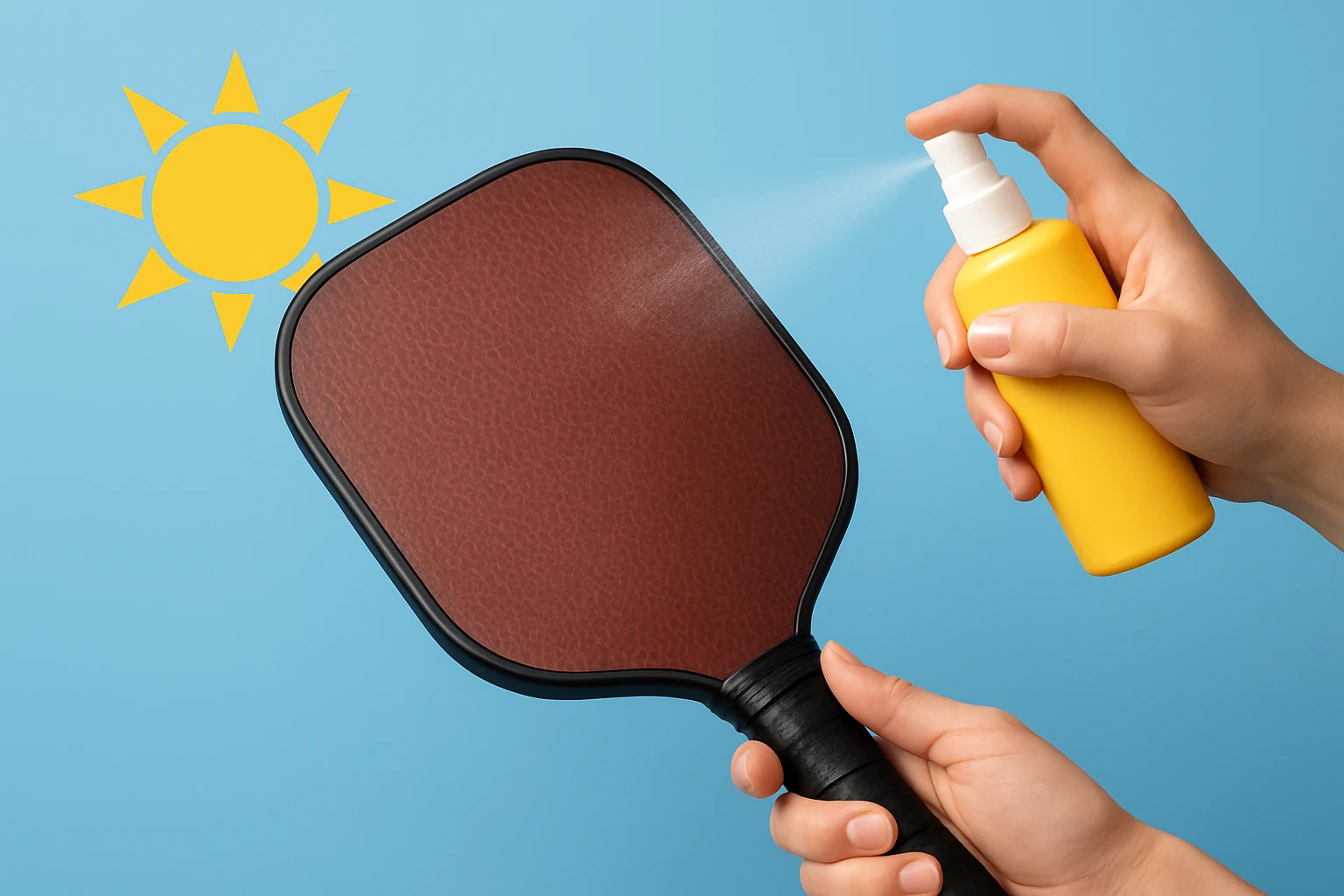
Step 7: Apply a Light Coat of UV‑Protective Spray (Optional)
For an extra measure, one can use a clear UV‑protective spray designed for sports equipment. The spray creates an invisible film that absorbs harmful wavelengths while preserving grip texture. Apply the spray in a well‑ventilated area, following the manufacturer’s instructions, and allow it to cure for at least 24 hours before use.
This step is optional because the neoprene sleeve and UV‑resistant tape already provide substantial protection. However, for paddles that are frequently used outdoors in high‑altitude locations, the additional barrier can extend the paddle’s lifespan by several years.
Step 8: Monitor for Early Signs of UV Damage
Regular visual inspections are essential. Look for fading of the paddle’s graphics, discoloration of the core, or a chalky residue on the surface. These are early indicators that UV photons are breaking down the polymer resin.
If any of these signs appear, increase the frequency of protective measures, such as applying a fresh layer of tape or storing the paddle in a darker location. Early intervention prevents minor fading from progressing to cracks that compromise structural integrity.
Step 9: Rotate Multiple Paddles to Distribute UV Exposure
Players who own more than one paddle can rotate usage, allowing each paddle to rest in a protected environment for part of the week. This practice reduces the cumulative UV exposure on a single paddle, thereby slowing the aging process.
Rotation also provides the opportunity to compare the condition of each paddle over time, helping the player identify which protective strategies are most effective.
Step 10: Conduct Periodic Professional Inspections
Finally, consider having a qualified paddle technician examine the paddle annually. Professionals can detect micro‑cracks or delamination that are invisible to the naked eye. Early repair or reinforcement can salvage a paddle that might otherwise need replacement.
By combining professional insight with the preventive steps outlined above, one creates a comprehensive maintenance program that guards against UV‑induced fading, warping, and cracking.
Tips & Pro Tips
- Store paddles upright rather than flat; this reduces pressure on the face and allows air circulation.
- When cleaning, avoid abrasive scrubbing pads; they can create micro‑scratches that act as entry points for UV light.
- Use a UV‑blocking window film in indoor storage rooms that have large glass panes.
- Consider applying the SUNGOOYUE Paddle Board Tape to the paddle grip as well, providing both UV protection and a slightly tackier feel.
- Keep the neoprene sleeve away from direct heat sources such as radiators; excessive heat can degrade the neoprene itself.
Conclusion
Protecting pickleball paddles from UV damage requires a systematic approach that blends proper storage, protective accessories, regular cleaning, and vigilant inspection. By following the ten steps presented in this guide, one can prevent fading, warping, and cracking, thereby preserving both the aesthetic appeal and the performance of the paddle. The recommended tools – the YTYKINOY Pickleball Paddle Covers and the SUNGOOYUE Paddle Board Tape – provide affordable, high‑quality solutions that complement any player’s maintenance routine. Consistent application of these practices ensures that the paddle remains a reliable partner on the court for many seasons to come.
Products Mentioned in This Guide
Frequently Asked Questions
How does UV radiation damage a pickleball paddle?
UV rays break down the resin and surface coating, causing fading, loss of stiffness, and eventual cracking.
What is the best way to store paddles to prevent UV exposure?
Keep paddles in a cool, shaded area or a UV‑blocking paddle case when not in use.
Do neoprene paddle covers protect against UV damage?
Yes, neoprene sleeves block most UV rays and also guard against scratches and moisture.
Can applying a UV‑resistant spray extend paddle life?
A UV‑resistant clear coat adds an extra protective layer and helps maintain the paddle’s color and strength.
How often should I inspect my paddle for UV‑related wear?
Check the paddle surface and edges before each session and perform a deeper inspection monthly.