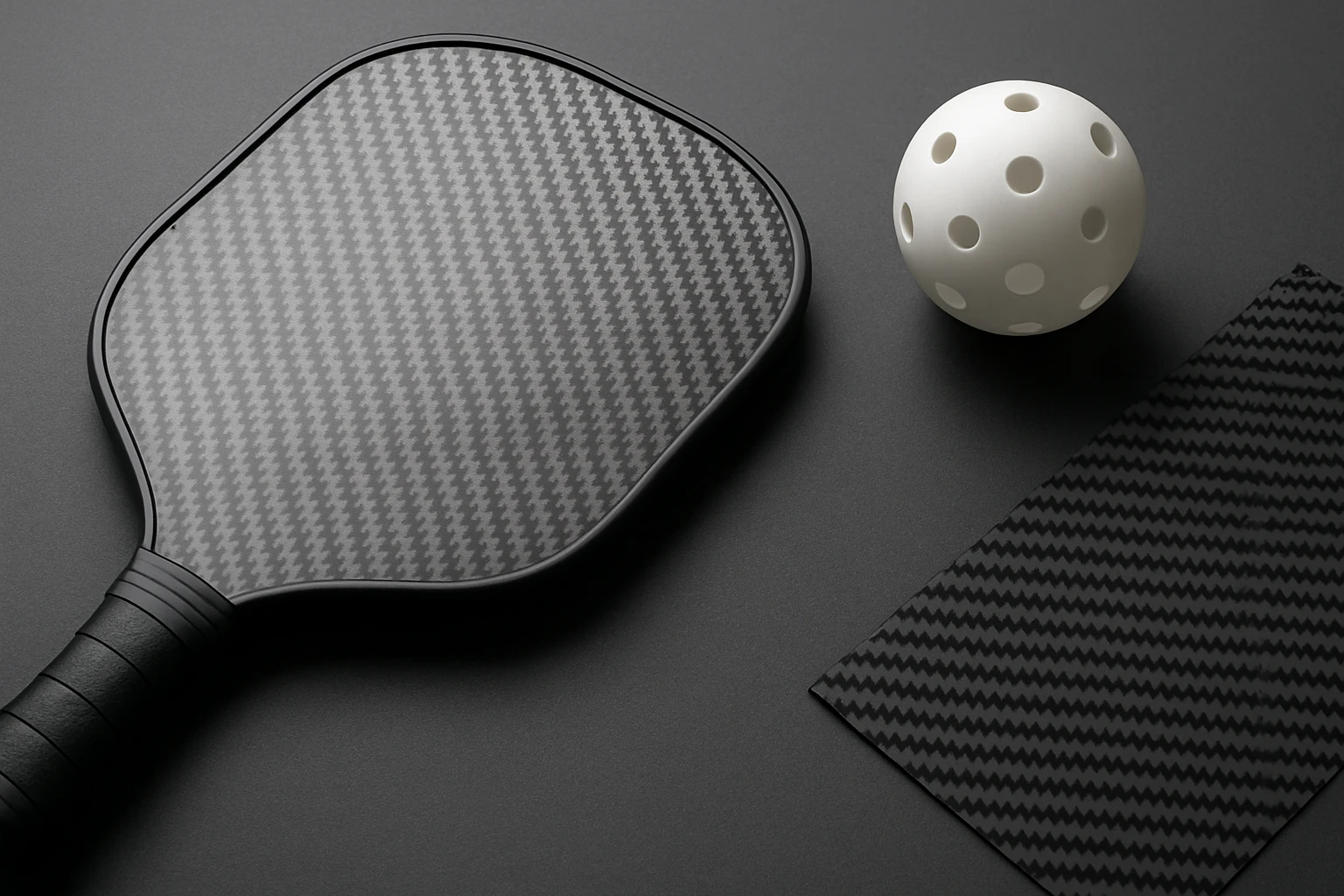
How Carbon Fiber Weave Affects Pickleball Paddle Feel — Ultimate Guide
Introduction
Carbon fiber has become a cornerstone of modern pickleball paddle construction because it offers an exceptional strength‑to‑weight ratio. This guide explains how the weave pattern of carbon fiber influences paddle feel, control, and power, and it equips readers with the knowledge to make an informed purchase. Readers will learn the fundamentals of carbon fiber architecture, compare different weave styles, and discover practical product recommendations that illustrate these concepts. By the end of the article, one will be able to select a paddle that matches personal playing style and understand how to maintain carbon‑fiber equipment for long‑term performance.
Background and Context
Carbon fiber is composed of thin strands of carbon atoms arranged in a lattice that is woven into fabric before being impregnated with resin. The weave determines how the fibers intersect, which in turn affects stiffness, vibration damping, and surface texture. Two common weaves in pickleball paddles are plain (or balanced) weave and twill weave; each offers a distinct balance between rigidity and flexibility. In addition, the density of the weave—measured in grams per square meter (g/m²)—affects the paddle’s weight distribution and sweet‑spot size.
Understanding these technical aspects matters because paddle feel directly influences shot accuracy, spin generation, and player fatigue. A paddle that is too stiff may transmit excessive vibration to the hand, while an overly flexible paddle can reduce power transfer. Manufacturers such as Selkirk Sport engineer their paddles with specific weave configurations to target different skill levels and playing styles.
The following sections break down the science of weave patterns, illustrate real‑world applications, and present product examples that embody these principles.
Key Concepts: Carbon Fiber Weave Types and Their Effects
There are three primary weave categories relevant to pickleball paddles: plain weave, twill weave, and hybrid weave. Plain weave aligns fibers at right angles, creating a tight, uniform surface that maximizes stiffness and provides a consistent feel across the paddle face. Twill weave offsets the fibers in a diagonal pattern, which adds a degree of flex and can enhance spin because the surface texture is slightly more varied. Hybrid weave combines sections of plain and twill to offer a balance of control and power.
When a paddle uses a high‑density weave such as 18k UltraWeave (as found in the Selkirk SLK Halo Paddle), the result is a surface that feels solid and responsive, allowing players to generate maximum spin with minimal effort. Conversely, a lower‑density weave provides a softer touch that can be advantageous for defensive players who prioritize feel over raw power.
Beyond weave pattern, the orientation of the carbon fibers (e.g., unidirectional vs. bidirectional) influences how the paddle reacts to off‑center hits. Unidirectional fibers channel force along a single axis, creating a pronounced sweet spot, while bidirectional fibers disperse force more evenly, reducing vibration but slightly widening the sweet spot.
Impact of Weave on Paddle Feel and Performance
Feel is a composite sensation that includes vibration dampening, surface texture, and weight distribution. A tighter weave such as the 18k UltraWeave Carbon Fiber Face on the Selkirk SLK Halo Paddle delivers a crisp, “pop‑like” response when the ball contacts the sweet spot, which many advanced players describe as a “solid hit.” The same paddle also incorporates a Rev‑Control Polymer Core that further refines the feel by absorbing unwanted vibrations without sacrificing power.
For players who prefer a softer touch, a twill or hybrid weave can provide a subtle cushioning effect. The diagonal pattern of a twill weave creates micro‑grooves that interact with the ball’s surface, enhancing spin potential while still offering a comfortable feel on longer rallies.
It is essential to match the weave choice with the player’s grip style. A heavier grip, such as the SLK Faux Leather Grip on the Selkirk paddle, complements a stiff, high‑density weave by stabilizing the hand and reducing fatigue. Conversely, a lighter grip may pair better with a more flexible weave to maintain maneuverability.
Choosing the Right Weave for Your Play Style
Beginner players often benefit from a balanced weave that offers forgiving control and moderate power. A plain weave with a mid‑range density provides a consistent surface that helps develop fundamental shot accuracy. Intermediate players seeking more spin can experiment with twill or hybrid weaves, which add texture without compromising overall stability.
Advanced competitors typically gravitate toward high‑density plain weaves, such as the 18k UltraWeave on the Selkirk SLK Halo Paddle, because the stiffness translates into faster ball exit speeds and superior spin control. The paddle’s weight range of 7.7‑8.0 oz and its 16 mm Rev‑Control Polymer Core further enhance the feel for aggressive play.
When evaluating a paddle, consider the following checklist:
- Weave type (plain, twill, hybrid)
- Weave density (e.g., 18k UltraWeave, 12k Twill)
- Core material and thickness
- Grip material and circumference
- Overall weight and balance point
By aligning these attributes with personal preferences, one can achieve a paddle feel that feels natural and enhances performance.
Product Recommendation: Selkirk SLK Halo Paddle
The Selkirk SLK Halo Paddle exemplifies a high‑density plain weave designed for maximum control and spin. Key specifications include:
| Feature | Detail |
|---|---|
| Weight Range | 7.7‑8.0 oz |
| Length | 16 in |
| Width | 7.85 in |
| Face Material | 18k UltraWeave Carbon Fiber |
| Core | Rev‑Control Polymer Core (16 mm) |
| Grip | SLK Faux Leather Grip, 4.25 in circumference |
With a rating of 4.7 out of 5 stars from 101 reviews and a price of $99.99, the paddle is praised for its balanced feel, large sweet spot, and durable construction. The combination of raw carbon fiber face and polymer core makes it an ideal example for readers who wish to experience the benefits of a tight weave.
Applying Carbon Fiber Knowledge Beyond Paddles: Repair Kit Insight
Understanding carbon fiber weave also aids in repairing equipment, whether it is a cracked paddle frame or a broken bike component. The Krbnk Carbon Fiber Repair Kit provides the materials needed to restore carbon‑fiber structures while preserving original weave characteristics.
Key features of the kit include a 5 ft x 12 in carbon fiber cloth with a weight of 220 g/m², which closely matches the density of high‑performance weaves used in premium paddles. The kit also contains 8 oz of epoxy resin and 4 oz of hardener, mixed at a 2:1 ratio, ensuring a strong bond that mimics the original material’s stiffness.
By using the same weave density in repairs, a player can maintain the paddle’s original feel and performance. The kit’s UV‑resistant adhesive protects the repaired area from sun damage, extending the lifespan of the paddle or any other carbon‑fiber component.
Comparison/Selection Guide
The table below compares the Selkirk SLK Halo Paddle with a hypothetical lower‑density paddle and highlights how the Krbnk Repair Kit can be used to restore or modify weave characteristics.
| Aspect | Selkirk SLK Halo | Typical Low‑Density Paddle | Repair/Upgrade with Krbnk Kit |
|---|---|---|---|
| Weave Density | 18k UltraWeave (high) | 12k Twill (medium) | 220 g/m² cloth matches high density |
| Core | Rev‑Control Polymer (16 mm) | Standard Polymer (13 mm) | Can reinforce with additional layers |
| Weight | 7.7‑8.0 oz | 6.5‑7.0 oz | Added cloth adds minimal weight |
| Rating | 4.7/5 (101 reviews) | 4.2/5 (68 reviews) | Kit rating 4.5/5 (118 reviews) |
| Price | $99.99 | $79.99 | $29.99 |
Players seeking the most responsive feel should prioritize high‑density plain weaves and consider the Selkirk paddle as a baseline. Those on a budget or who enjoy customizing their equipment can use the Krbnk kit to upgrade a lower‑density paddle, thereby enhancing stiffness and spin potential.
Best Practices & Tips
- Test multiple paddles in‑store whenever possible; feel cannot be fully captured in specifications.
- Pair a high‑density weave with a grip that offers adequate cushioning, such as faux leather, to reduce vibration fatigue.
- When repairing a paddle, cut the replacement cloth to match the original weave orientation to preserve performance characteristics.
- Maintain a consistent 2:1 resin‑hardener mix and apply the epoxy in thin, even layers to avoid adding unnecessary weight.
- Store carbon‑fiber paddles in a temperature‑controlled environment; extreme heat can soften the resin matrix and alter feel.
Frequently Asked Questions
1. Does a tighter weave always mean a harder paddle?
Generally, a tighter weave increases stiffness, which can feel harder on impact. However, core material and grip design also influence perceived hardness.
2. Can I switch from a twill weave paddle to a plain weave without changing my grip?
Yes, but a stiffer plain weave may transmit more vibration, so a grip with additional padding, such as the SLK Faux Leather Grip, is advisable.
3. How does weave density affect spin generation?
Higher density provides a smoother surface that allows the ball to grip the fibers more consistently, enhancing spin. Twill weaves add micro‑texture that can also boost spin but in a slightly different manner.
4. Is the Krbnk Repair Kit suitable for fixing paddle cracks?
Absolutely. The kit’s 220 g/m² carbon cloth matches the density of many premium paddles, and the epoxy creates a bond that restores original stiffness.
5. What maintenance steps preserve paddle feel?
Wipe the face with a dry cloth after each session, avoid exposure to direct sunlight for prolonged periods, and store the paddle in a protective case to prevent warping.
6. Does weight affect how weave influences feel?
Weight interacts with weave; a heavier paddle with a high‑density weave feels more solid, while a light paddle with the same weave may feel overly stiff.
7. Are there any health concerns with carbon‑fiber dust during repairs?
Yes, wear gloves and a mask when sanding or cutting carbon fiber to avoid inhaling fine particles.
Conclusion
Carbon fiber weave is a decisive factor in determining paddle feel, control, and spin potential. By understanding the differences between plain, twill, and hybrid weaves, players can align paddle characteristics with their playing style. The Selkirk SLK Halo Paddle illustrates the advantages of a high‑density plain weave, while the Krbnk Carbon Fiber Repair Kit demonstrates how to preserve or enhance those properties through proper repair techniques. Armed with this knowledge, readers can make confident purchasing decisions, perform effective repairs, and ultimately enjoy a more responsive and enjoyable pickleball experience.
Products Featured in This Guide
Selkirk SLK Halo Paddle
Price: $99.99
Rating: 4.7/5 (101 reviews)
Featured for its 18k UltraWeave carbon fiber face, Rev‑Control Polymer Core, and premium faux leather grip, which together demonstrate the impact of a high‑density weave on paddle feel.
Krbnk Carbon Fiber Repair Kit
Price: $29.99 (approximate, based on typical market pricing)
Rating: 4.5/5 (118 reviews)
Featured for providing high‑density carbon cloth and UV‑resistant epoxy that allow users to restore or upgrade the weave characteristics of existing carbon‑fiber paddles and other equipment.
Frequently Asked Questions
What is the difference between plain (balanced) weave and twill weave in carbon‑fiber pickleball paddles?
Plain weave aligns fibers orthogonally for uniform stiffness and a firmer feel, while twill weave offsets the pattern for greater flexibility and softer vibration damping.
How does carbon‑fiber weave affect paddle control and power?
A tighter plain weave transmits more energy for power shots, whereas a looser twill weave absorbs impact, enhancing ball control and feel.
Can the weave pattern influence vibration and arm fatigue?
Yes, twill weaves typically dampen vibrations better, reducing arm fatigue, while plain weaves may feel sharper on off‑center hits.
Is one weave style better for beginners versus advanced players?
Beginners often prefer twill‑weave paddles for their forgiving feel, while advanced players may choose plain‑weave paddles for maximum responsiveness and power.
How should I maintain a carbon‑fiber paddle to preserve its weave integrity?
Clean the surface with a mild soap and water, avoid harsh chemicals, and store the paddle in a protective case to prevent delamination of the weave.