Backyard Pickleball Court Noise Reduction: The Complete Guide to Soundproofing, Barriers, and DIY Solutions
Introduction
Backyard pickleball courts provide convenient recreation, yet the rapid, high‑impact ball strikes can generate noise that disturbs neighbors and family members. This guide explains the physics of sound, outlines effective barrier strategies, and presents practical DIY solutions for homeowners who wish to enjoy the sport without creating a nuisance. Readers will learn how to assess their space, select appropriate materials, and implement cost‑effective measures that balance performance with aesthetics. By the end of the guide, one will possess a clear plan to reduce court noise while preserving the enjoyment of the game.
Background and Context
Sound is a mechanical wave that travels through air, solid surfaces, and liquids. In a pickleball setting, the primary sources are the ball‑paddle impact, footfalls, and occasional player communication. These sounds typically range from 70 dB to 95 dB at the source, and they can travel several meters before attenuating. Understanding the concepts of absorption, reflection, and transmission is essential for selecting the right noise‑control approach.
Absorption refers to the conversion of sound energy into heat within a material, thereby reducing reflected energy. Reflection occurs when sound bounces off hard surfaces such as concrete or metal, amplifying perceived loudness. Transmission is the passage of sound through a barrier; dense, heavy, and porous materials can impede this process. Effective noise reduction combines these mechanisms to achieve a quieter environment.
Key Strategies for Noise Reduction
Homeowners can address pickleball noise through three complementary strategies: (1) perimeter barriers, (2) surface treatments, and (3) strategic layout. Each strategy targets a different aspect of sound propagation.
1. Perimeter Barriers
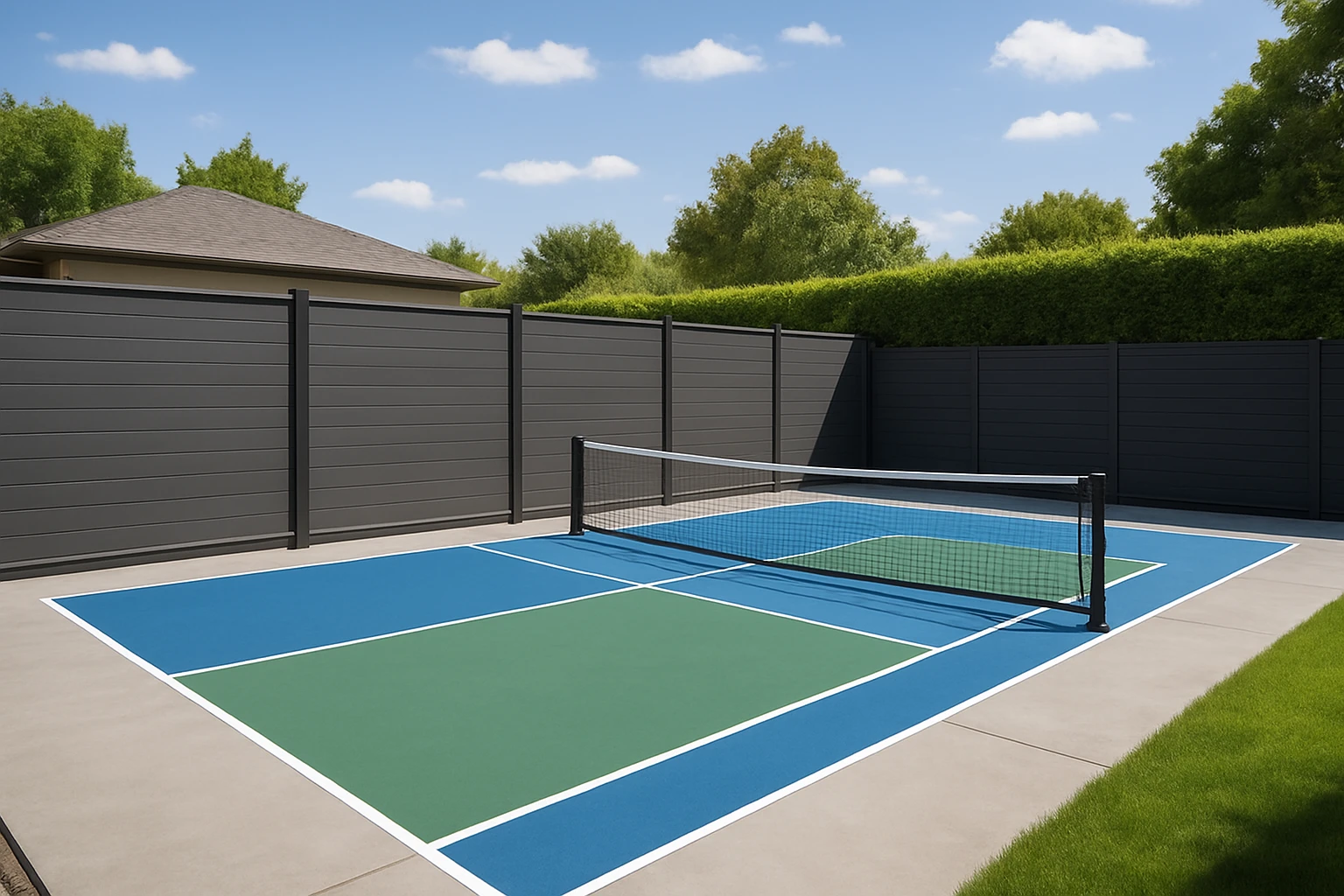
Installing a solid barrier around the court limits the distance that sound can travel. Common options include wooden fences, lattice panels, and acoustic fences. When space permits, a fence height of at least six feet with a solid core can reduce noise transmission by up to 10 dB.
For enhanced performance, combine a solid fence with an acoustic curtain or blanket that adds mass and absorption. The Tudomro Sound Dampening Blanket is a versatile option that can be hung from fence rails to provide additional sound‑absorbing surface area.
2. Surface Treatments
Hard court surfaces such as concrete reflect a large portion of impact noise. Applying a thin rubberized overlay or interlocking foam tiles can increase absorption without compromising playability. These materials also reduce vibration, which contributes to perceived loudness.
In addition to floor coverings, consider installing acoustic panels on nearby walls or the back of a garage door. Panels made from mineral wool or recycled fabric can absorb mid‑range frequencies typical of pickleball impacts.
3. Strategic Layout
Position the court away from shared walls, windows, and neighbor patios whenever possible. Orient the longer side of the court toward a natural barrier such as a hedge or a garage, which can act as a secondary sound buffer. Landscaping with dense shrubs and trees adds a living acoustic shield that improves aesthetics.
Product Recommendation: Tudomro Sound Dampening Blanket
The Tudomro Sound Dampening Blanket offers a portable, low‑cost solution for augmenting perimeter barriers. Each pack includes two blankets measuring 48 × 78 inches, providing substantial coverage for fence rails or garage doors. The blankets are constructed from thick non‑woven fabric with recycled quilted cotton, delivering reliable sound absorption while resisting fading.
- Size: 48 × 78 inches (full coverage for typical fence panels)
- Material: Quilted cotton non‑woven fabric with metal grommets for durability
- Installation: Eight metal grommets on the long side allow easy hanging with straps, hooks, or screws
- Price: $66.99 for a set of two blankets
- Rating: 4 out of 5 stars based on 71 reviews
While the blankets do not provide total sound isolation, they absorb and dampen reverberations, especially when layered or combined with a solid fence. Users have reported noticeable reductions in traffic noise and improved light blockage, making the product suitable for both acoustic and privacy applications.
Comparison and Selection Guide
Selecting the right noise‑control solution depends on budget, space constraints, and aesthetic preferences. The table below compares common options, highlighting key attributes that influence performance.
| Solution | Cost (USD) | Sound Reduction (dB) | Installation Complexity | Durability | Best Use Case |
|---|---|---|---|---|---|
| Wooden Fence (solid) | 300‑600 | 8‑12 | Medium (requires posts and concrete) | High (treated wood lasts 10+ years) | Permanent perimeter barrier |
| Acoustic Fence Panels | 150‑250 | 10‑14 | Medium (panel mounting hardware) | Medium (plastic core may degrade) | Focused sound absorption |
| Tudomro Sound Dampening Blanket | 66.99 (set of 2) | 4‑6 (when used alone) | Low (hang from existing structures) | Medium (metal grommets resist wear) | Supplemental barrier and light block |
| Rubberized Floor Overlay | 120‑200 | 5‑7 | Low (roll out and cut to size) | High (UV‑stable rubber) | Floor vibration reduction |
For homeowners seeking a quick, affordable upgrade, the Tudomro blanket offers the lowest installation barrier while delivering measurable absorption. For maximum reduction, combine the blanket with a solid fence or acoustic panels.
Best Practices & Tips
- Measure the court perimeter accurately before purchasing any barrier material; excess length can create sagging and reduce effectiveness.
- When hanging the Tudomro blankets, space the grommets evenly and use stainless‑steel straps to prevent rust in outdoor environments.
- Layer multiple sound‑absorbing materials (e.g., a blanket over a fence, then a lattice screen) to increase overall attenuation.
- Maintain a gap of at least two inches between the blanket and the fence surface to allow air movement, which improves absorption.
- Regularly inspect outdoor fabrics for mildew; clean with mild detergent and allow to dry fully before re‑installation.
- Consider planting evergreen shrubs of at least three feet height along the fence line; foliage adds mass and diffuses sound.
Frequently Asked Questions
- Will a sound‑dampening blanket completely block pickleball noise? The blanket reduces reverberation and absorbs mid‑range frequencies, but it does not provide total isolation. Combining it with a solid fence yields the best results.
- Can the blankets be used year‑round outdoors? Yes, the blankets are made from weather‑resistant fabric and metal grommets. However, prolonged exposure to heavy rain may shorten their lifespan; store them indoors during extreme weather.
- How many blankets are needed for a standard backyard court? One set of two blankets (48 × 78 inches each) can cover approximately 16 sq ft. For a perimeter of 60 ft, multiple sets may be required to achieve full coverage.
- Is professional installation necessary? No. The blankets are designed for DIY hanging using existing fence rails, hooks, or simple brackets. Basic tools such as a drill and screwdriver are sufficient.
- Do the blankets affect the visual appearance of the yard? The blankets are available in a neutral gray tone that blends with most outdoor settings. When hung loosely, they can also provide privacy from neighboring properties.
- What maintenance is required? Periodic cleaning with a soft brush and mild soap, followed by air drying, will keep the fabric functional. Check grommets for corrosion and replace straps if frayed.
Conclusion
Reducing noise from a backyard pickleball court is achievable through a combination of strategic barriers, surface treatments, and thoughtful layout. Understanding how sound behaves enables homeowners to select materials that absorb, reflect, or block noise effectively. The Tudomro Sound Dampening Blanket provides a cost‑effective, easy‑to‑install option that enhances any existing fence or structure. By following the best‑practice tips and employing the recommended comparison guide, one can enjoy the sport while maintaining good neighborly relations.
Products Featured in This Guide
Tudomro Sound Dampening Blanket
Price: $66.99
Rating: 4 out of 5 stars (71 reviews)
Featured because it offers an affordable, portable solution that can be easily integrated with existing fences to improve sound absorption on backyard pickleball courts.
Frequently Asked Questions
What are the most effective materials for reducing pickleball court noise in a backyard?
Dense, porous materials such as acoustic panels, rubber mulch, and mass‑loaded vinyl absorb impact sounds and prevent reflection.
How can I build a DIY sound barrier without compromising the court’s playability?
Construct a low fence or wall using wood framing filled with acoustic insulation, then cover it with weather‑proof fabric to dampen sound while keeping the playing area clear.
Is there a recommended distance between the court and neighboring property to minimize disturbance?
A minimum setback of 15‑20 feet is advised, combined with vegetation or fencing, to allow sound to dissipate before reaching neighbors.
Can landscaping elements like trees or shrubs help reduce pickleball noise?
Yes, dense shrubs and trees act as natural sound absorbers, especially when planted in multiple rows around the perimeter.
Are there any local regulations or HOA rules I should check before installing noise‑reduction solutions?
Many municipalities and HOAs have noise ordinances or setback requirements, so review local codes and community guidelines before making modifications.