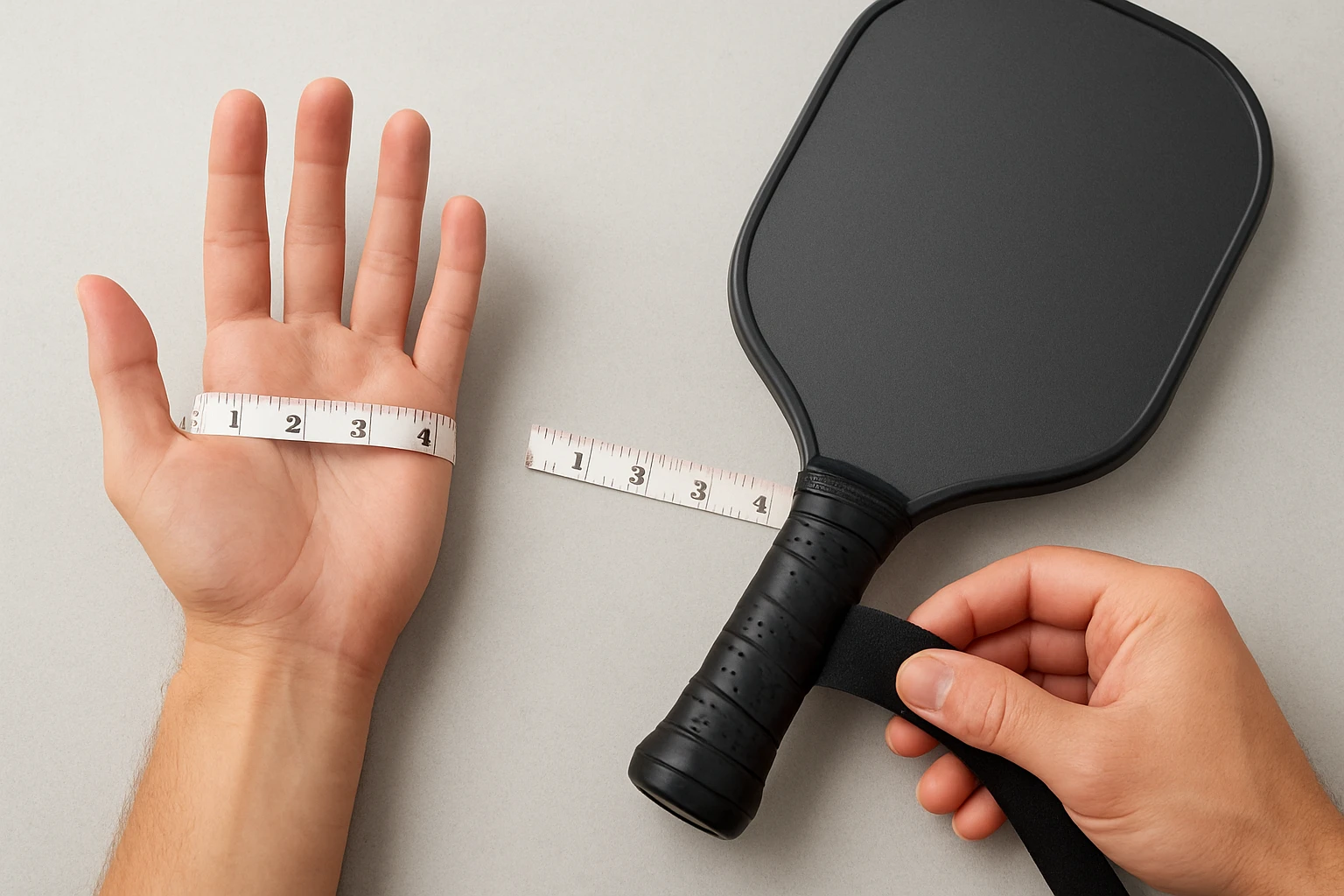
Introduction
Choosing the correct pickleball paddle grip size is essential for achieving optimal comfort, precise control, and long‑term injury prevention. This guide will teach the reader how to assess hand dimensions, evaluate paddle handle specifications, and select a grip that matches personal playing style. By following each step, one will reduce the risk of tennis elbow, trigger finger, and other overuse injuries while enhancing shot accuracy. The information presented is based on professional standards and incorporates two highly rated Amazon products that can serve as practical tools.
What You’ll Need
- Flexible measuring tape or ruler
- Paper and pen for recording measurements
- Hesacore Soft Grip Pickleball Paddle (available here)
- Tannius Pickleball Grip Tape 6‑Pack (available here)
- Scissors or a sharp utility knife
- Optional: Overgrip for additional sweat absorption
Step 1: Measure Your Hand
The first step involves determining the length of the dominant hand from the tip of the middle finger to the wrist crease. Use a flexible measuring tape and record the value in centimeters; most adult players fall between 17 cm and 20 cm. Next, measure the circumference of the palm just below the knuckles, which indicates the natural grip thickness. These two dimensions provide a baseline for selecting a grip that will neither feel too cramped nor too loose.
Why this matters: A grip that is too small forces the player to squeeze the handle, creating excess tension in the forearm muscles. Conversely, an oversized grip encourages a loose hold, reducing control and increasing vibration transmission. Accurate measurements lay the foundation for a comfortable and injury‑free playing experience.
Step 2: Determine Preferred Grip Thickness
Grip thickness is expressed in millimeters; common options range from 1.5 mm (thin) to 2.5 mm (thick). Players with smaller hands or those who favor a quick wrist snap often benefit from a thinner grip, while larger‑handed individuals or those seeking maximal vibration dampening may prefer a thicker profile. The Hesacore Soft Grip offers two selectable thicknesses—Size S at 1.5 mm and Size M at 2.0 mm—allowing a tailored fit.
Product recommendation: The Hesacore Soft Grip Pickleball Paddle features a gelatinous gel material that molds instantly to the hand, providing a cushion that reduces impact stress. Priced at $27.90 and holding a 4.5‑star rating from 196 reviews, it combines comfort with a hexagonal design that expands the contact surface by up to 14 %. This design enhances grip efficiency and lessens finger and wrist strain during long matches.
Step 3: Evaluate Paddle Handle Dimensions
Inspect the paddle’s handle length and diameter. Most standard pickleball paddles have a handle length of 5 inches, but some models may be shorter or longer. The Hesacore grip is designed for a 5.25 inch length and should not be applied to handles shorter than 5 inches without trimming. If the handle is slightly shorter, the grip can be trimmed by 0.25–0.5 inch, but the integrity of the hexagonal pattern must be preserved.
Measure the handle diameter with a caliper or a ruler; typical diameters range from 1 inch to 1.2 inch. Compare this measurement with the selected grip thickness. A grip that matches the handle diameter will sit flush without gaps, preventing the hand from sliding during vigorous swings.
Step 4: Select Appropriate Grip Material
Two primary material categories dominate the market: gel‑based grips that absorb vibration and tacky overgrips that enhance sweat absorption. The Hesacore Soft Grip belongs to the gel‑based category, offering a soft, adaptive feel that reduces vibration and supports injury prevention. For players who perspire heavily, an additional overgrip can improve moisture management.
Product recommendation: The Tannius Pickleball Grip Tape 6‑Pack provides a super‑absorbent, non‑slip surface that can be applied over the Hesacore grip. Each tape is pre‑cut on both sides, simplifying installation, and the tacky composition ensures lasting adhesion. Priced at $9.99 with a 4.4‑star rating from 221 reviews, this product delivers good value for players seeking extra sweat control.
Step 5: Install and Test the Grip
Begin by removing any existing factory grip from the paddle using a utility knife or scissors. Clean the handle surface with a light alcohol wipe to eliminate residue. Align the Hesacore grip with the handle, ensuring the hexagonal pattern faces outward. Use the included plastic strips to secure the grip temporarily, then wrap the Tannius overgrip tightly around the gel layer, overlapping the edges by approximately 0.5 inch.
After installation, hold the paddle with a relaxed grip and perform a series of practice swings. Pay attention to any lingering vibration, hand fatigue, or slippage. Adjust the overgrip tension if necessary, and trim excess gel material if the grip extends beyond the handle. A properly installed system should feel like an extension of the hand, providing both stability and cushioning.
Tips & Pro Tips
- When trimming the Hesacore grip, cut only the excess length; excessive trimming can compromise the hexagonal structure and reduce grip efficiency.
- Apply the Tannius overgrip in a spiral fashion, overlapping each layer by half its width to achieve uniform pressure distribution.
- Replace the overgrip every two to three months, or sooner if it shows signs of wear, to maintain optimal moisture wicking.
- Periodically reassess hand measurements, especially after periods of intensive training, as muscle development can alter grip requirements.
Troubleshooting
| Problem | Possible Cause | Solution |
|---|---|---|
| Grip feels loose | Overgrip not wrapped tightly enough | Re‑wrap the Tannius tape, ensuring each layer overlaps by 50 % and compress the grip firmly. |
| Excessive vibration | Gel grip not fully adhered to handle | Remove the grip, clean the handle, and reinstall using the plastic strips to secure the gel layer before applying the overgrip. |
| Hand sweats despite overgrip | Overgrip worn out | Replace the Tannius tape with a fresh piece from the pack. |
Conclusion
By measuring hand dimensions, selecting an appropriate thickness, evaluating paddle handle size, and installing a high‑quality gel grip together with a super‑absorbent overgrip, one can achieve superior comfort, precise control, and reduced risk of overuse injuries. The steps outlined in this guide are applicable to most recreational and competitive players, and the recommended products provide reliable tools to implement the process efficiently. Consistent evaluation and periodic maintenance will ensure that the grip continues to perform at its best throughout the playing season.
Products Mentioned in This Guide
Frequently Asked Questions
Why is choosing the correct pickleball paddle grip size important?
The right grip size enhances comfort, control, and reduces the risk of overuse injuries like tennis elbow.
How do I measure my hand to determine the proper grip size?
Measure from the tip of your middle finger to the base of your palm; compare that length to the paddle’s grip specifications.
What grip size is recommended for a hand measurement of 4.5 inches?
A 4.5‑inch measurement typically matches a grip size of 4 ⅛ inches, which is standard for most adult players.
Can using an overgrip improve my playing experience?
Yes, an overgrip adds extra cushioning and sweat absorption, helping maintain a secure hold during long matches.
Are the Hesacore Soft Grip Paddle and Tannius Grip Tape good options for adjusting grip size?
Both products are highly rated on Amazon and provide easy ways to customize grip thickness and feel.