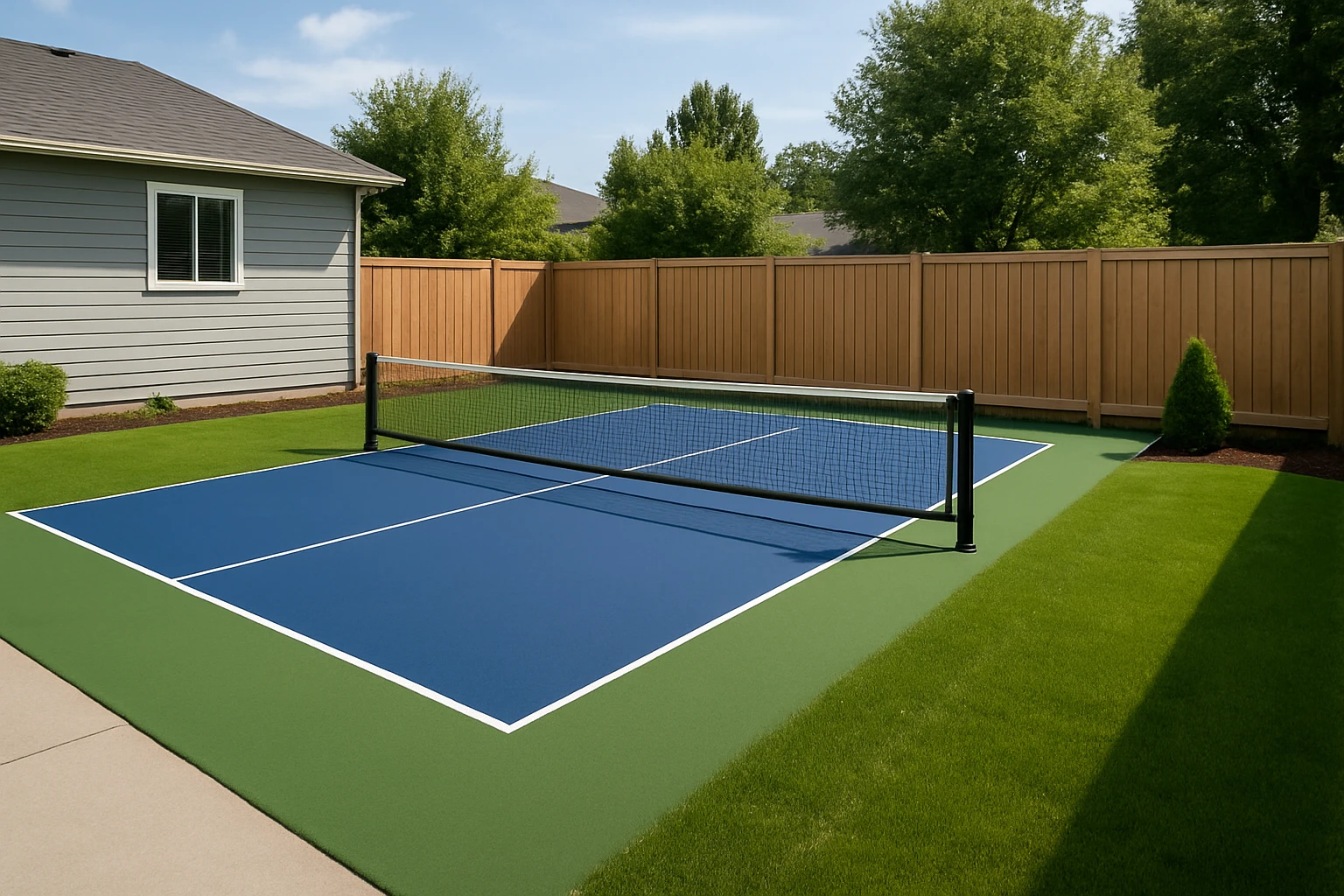
Introduction
This guide explains whether a homeowner must obtain a permit before constructing a pickleball court in a private yard. Readers will learn how local zoning ordinances, building codes, and neighborhood covenants affect the approval process. The article also presents practical design tips and product recommendations that streamline construction while remaining compliant. By the end of the guide, one will be equipped to evaluate permit requirements, choose suitable equipment, and execute a safe, legal, and enjoyable backyard court.
Background/Context
Pickleball has surged in popularity, prompting many homeowners to convert driveways, patios, or spare land into dedicated playing areas. Unlike large commercial facilities, residential courts typically occupy less than 2,000 square feet, yet they still intersect with municipal regulations. Zoning districts classify land uses such as residential, mixed‑use, or agricultural, each with distinct setbacks, height limits, and accessory‑structure rules. Building codes address structural safety, drainage, and accessibility, while homeowner associations (HOAs) may impose aesthetic standards. Understanding these layers prevents costly rework and legal disputes.
Most jurisdictions treat a backyard pickleball court as an "accessory structure" or "landscape improvement." Consequently, the need for a permit often hinges on factors such as court dimensions, surface material, permanent foundations, and utility connections. The following sections break down these variables and outline a systematic approach to determine permit obligations.
Understanding Local Zoning and Building Regulations
The first step is to consult the municipality’s zoning ordinance, usually available on the city or county website. Key provisions to review include:
- Accessory Structure Definition: Determines whether a court is classified as a temporary or permanent addition.
- Setback Requirements: Minimum distances from property lines, sidewalks, or easements.
- Maximum Footprint: Limits on the total area that can be covered by non‑residential structures.
- Height Restrictions: Relevant if the court includes a net system with tall poles.
If the proposed court complies with all zoning criteria, many municipalities waive the formal building permit, issuing instead a simple site‑plan approval. However, if the design involves poured concrete, underground drainage, or permanent anchoring, a building permit is typically required.
When a Permit Is Typically Required
Homeowners should anticipate a permit in the following scenarios:
- Permanent Foundations: Concrete slabs, footings, or paver bases that alter the existing grading.
- Utility Modifications: Relocating irrigation lines, electrical outlets, or water connections.
- Height Exceeding Setbacks: Net posts taller than the allowed accessory‑structure height.
- HOA Approval: Covenants that mandate architectural review before any exterior alteration.
In each case, the homeowner must submit a detailed plan, including site layout, material specifications, and engineering calculations where applicable. The permitting office will review the submission for compliance with both the zoning ordinance and the International Residential Code (IRC) adopted by most U.S. jurisdictions.
Design Considerations That Influence Permit Needs
Design choices can either simplify or complicate the permitting process. Consider the following strategies:
- Modular, Portable Systems: Equipment that rests on a leveled surface without permanent anchors often qualifies as a temporary structure.
- Surface Selection: Interlocking pavers or rubber tiles placed on compacted soil are generally acceptable without a permit, whereas poured concrete typically triggers a building permit.
- Net Height Management: Using adjustable net poles that stay below the local height limit reduces regulatory scrutiny.
- Minimal Grading Changes: Preserving existing drainage patterns avoids additional engineering reviews.
By aligning the design with these principles, homeowners can frequently avoid the time and expense associated with formal permits while still delivering a high‑quality playing experience.
Product Recommendations for Permit‑Friendly Courts
Two products stand out for homeowners seeking a balance between durability and ease of installation. The first is a versatile, convertible net system that can be assembled on any flat surface without permanent foundations. The second is a compact rebounder net that supports solo practice and requires no ground anchoring.
For a full‑size or half‑court solution that remains portable, consider the Bagail Pickleball Net Set. This system features a 22‑foot regulation net and an 11‑foot half‑court net, both supported by lockable wheels and a sturdy 8‑ply PE net. The set includes a ball collector, a 600D Oxford carrying bag, and a push‑lock assembly that one person can complete in minutes. Its powder‑coated steel poles resist rust, making it suitable for year‑round outdoor use. At $71.99 and a 4.7‑star rating from 417 reviews, it offers excellent value for families and casual players.
For solo drills, the SwingIt Pickleball Rebounder Net delivers a high‑resilience mesh with a marked kitchen zone and adjustable bungees. The 6‑foot wide net can be set up in under twenty minutes, and its lightweight frame folds into a carry bag for storage. With a price of $69.99 and a 4.5‑star rating from 55 reviewers, it provides an affordable way to practice dinks, volleys, and drives without the need for a permanent court surface.
Comparison/Selection Guide
| Feature | Bagail Pickleball Net Set | SwingIt Pickleball Rebounder Net |
|---|---|---|
| Primary Use | Full‑size or half‑court play for multiple players | Solo or two‑player drill practice |
| Net Size | 22 ft regulation (36" H) and 11 ft half‑court | 6 ft wide, 34" H mini net |
| Portability | Wheeled frame, 600D carrying bag | Foldable frame, lightweight carry bag |
| Installation Time | Minutes, no tools required | Approximately 20 minutes, tool‑free |
| Surface Compatibility | Works on grass, concrete, or packed earth | Requires flat surface, no permanent anchoring |
| Price | $71.99 | $69.99 |
| Customer Rating | 4.7/5 (417 reviews) | 4.5/5 (55 reviews) |
| Warranty | 18‑month limited warranty | Manufacturer warranty (unspecified) |
Homeowners who prioritize a traditional court experience should select the Bagail system, especially when space permits a full‑size layout. Those with limited yard area or a focus on skill development may find the SwingIt rebounder more appropriate.
Best Practices & Tips
Beyond product selection, follow these best practices to ensure a smooth, compliant build:
- Document the Site Plan: Create a scaled drawing that shows property lines, setbacks, and the proposed court footprint. Include dimensions of the net system and any permanent features.
- Check for Underground Utilities: Call the local 811 service before digging to avoid damaging water, gas, or electrical lines.
- Maintain Drainage: Preserve the natural slope of the yard or install a French drain if the court surface creates water‑collection zones.
- Obtain HOA Approval Early: Submit renderings and product specifications to the architectural review committee to prevent later objections.
- Keep Records: Retain copies of permit applications, inspection reports, and product warranties for future resale or insurance purposes.
Implementing these steps reduces the likelihood of surprise inspections and fosters a positive relationship with neighbors and local officials.
Frequently Asked Questions
- Do I need a building permit for a portable net system?
- In most jurisdictions, a fully portable system such as the Bagail Pickleball Net Set does not require a building permit because it does not involve permanent foundations or structural alterations.
- Can I install a pickleball court on a concrete driveway?
- Yes, provided the driveway meets setback requirements and the surface is level. Using a rubber or interlocking tile overlay can improve traction without triggering a permit.
- What if my HOA restricts accessory structures?
- Review the HOA covenants for any size or aesthetic limitations. Obtain written approval before purchasing equipment, and consider using the SwingIt rebounder, which is less conspicuous.
- How far from the property line should the net be placed?
- Typical residential setbacks range from 5 to 10 feet. Verify the exact distance in your local zoning code to avoid encroachment violations.
- Do I need electrical work for lighting?
- If you plan to install permanent lighting fixtures, a building permit is usually required. Portable LED floodlights that plug into existing outlets generally do not need a permit.
- Is a permit required for a sand‑filled court surface?
- Sand surfaces are considered temporary landscaping. A permit is rarely needed unless the sand is contained within a concrete frame.
- What inspections are typical after a permit is issued?
- Most municipalities conduct a rough‑in inspection to verify foundation work, followed by a final inspection to ensure the court complies with safety and code standards.
Conclusion
Determining whether a permit is required for a backyard pickleball court involves reviewing zoning ordinances, assessing the permanence of the construction, and consulting any HOA rules. By opting for modular equipment such as the Bagail Pickleball Net Set or the SwingIt Pickleball Rebounder Net, homeowners can often avoid the need for a formal building permit while still enjoying a high‑quality playing experience. Following the best‑practice checklist, documenting the site plan, and securing any required approvals will ensure a smooth, legally compliant installation.
Products Featured in This Guide
Bagail Pickleball Net Set
Price: $71.99 | Rating: 4.7/5 (417 reviews)
Featured for its convertible 22 ft regulation and 11 ft half‑court nets, lockable wheels, and tool‑free assembly, making it ideal for permit‑friendly, portable court setups.
SwingIt Pickleball Rebounder Net
Price: $69.99 | Rating: 4.5/5 (55 reviews)
Featured for its solo‑training rebound net with kitchen‑line markings, adjustable bungees, and lightweight portable design, perfect for skill development without permanent installation.
Frequently Asked Questions
Do I need a building permit to construct a pickleball court in my backyard?
Most municipalities require a permit for any new accessory structure, including a pickleball court, especially if it exceeds a certain size or involves grading.
How can I find out if my property’s zoning district allows a backyard pickleball court?
Check your local zoning ordinance or contact the planning department to confirm permitted accessory uses, setbacks, and height limits for your district.
What role do homeowner association (HOA) rules play in building a pickleball court?
HOAs may impose aesthetic standards, size restrictions, or require prior approval, so review covenants and submit plans before construction.
Which building code requirements should I consider when building a residential pickleball court?
Ensure proper surface drainage, safe footing, and compliance with any accessibility or fence height regulations outlined in the local building code.
Is there a maximum square footage for a residential pickleball court that avoids a permit?
Many jurisdictions exempt structures under 200 sq ft, but courts typically exceed that, so a permit is usually required regardless of size.