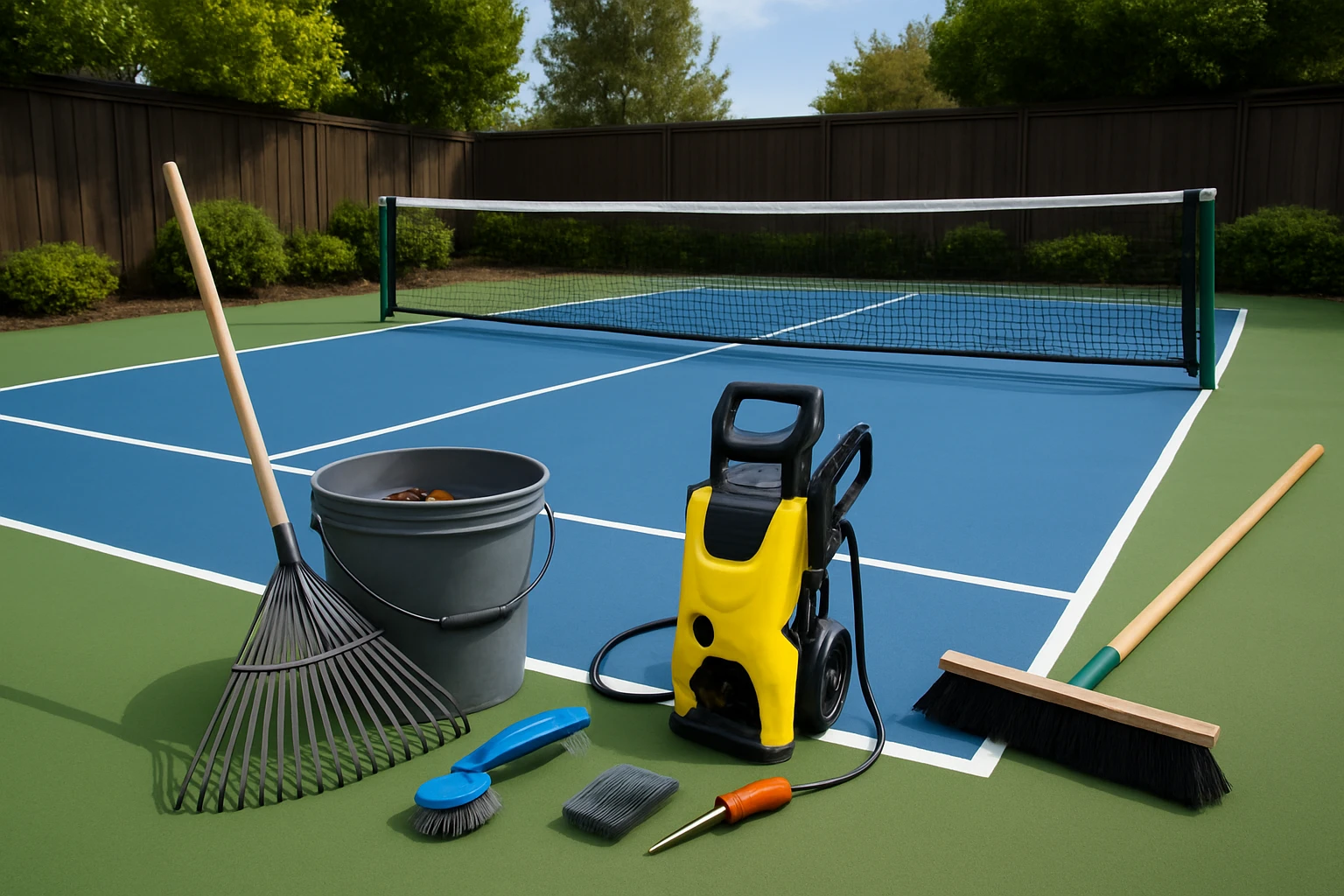
How to Maintain Your Backyard Pickleball Court: A Seasonal Maintenance Checklist for Year‑Round Play
Introduction
Backyard pickleball courts provide endless recreation for families, friends, and fitness enthusiasts. However, like any outdoor facility, they require regular upkeep to ensure safe play and longevity. This guide teaches readers how to inspect, clean, protect, and adjust their courts throughout the four seasons, while recommending reliable tools that simplify each task. By following the checklist, one can enjoy consistent performance, avoid costly repairs, and extend the life of both the playing surface and equipment.
The article is organized into clear steps, each accompanied by actionable instructions and product suggestions drawn from proven Amazon listings. Whether the court is a simple concrete slab or a grass‑lined area with a portable net, the principles remain the same. Readers will finish with confidence that their backyard pickleball arena remains ready for action, rain or shine.
What You'll Need
- Soft‑bristle broom or push broom for debris removal
- Garden hose with adjustable nozzle
- pH‑balanced surface cleaner (optional for concrete)
- Protective net and frame kit – for example, the Fostoy Pickleball Net & Paddle Set
- Portable backup net – such as the FDLS Portable Pickleball Net
- Sturdy storage bag for paddles and balls
- Weather‑proof cover or tarp for winter protection
- Basic hand tools (wrench, screwdriver) for occasional frame adjustments
Step 1: Conduct a Full Visual Inspection
Before any cleaning or repairs, one should walk the perimeter and surface to identify visible damage. Look for cracked concrete, uneven grass patches, rust on metal frames, and frayed netting. Document findings with a smartphone photo; this creates a baseline for future comparisons.
If the net is part of the Fostoy Pickleball Net & Paddle Set, examine the metal base, wheels, and locking mechanisms. The reinforced 1 mm wall thickness and lockable 360° wheels are designed to resist sway, yet dust can accumulate in the wheel bearings, reducing mobility.
For smaller setups, the FDLS Portable Pickleball Net offers an adjustable webbing strap that should be taut without sag. Check the strap tension and replace any broken elastic cords.
Record any issues now; addressing them early prevents escalation during high‑traffic seasons.
Step 2: Remove Debris and Clean the Surface
Using a soft‑bristle broom, sweep leaves, twigs, and loose dirt from the playing area. For concrete courts, follow with a garden hose set to a moderate spray to rinse away fine particles. If stains persist, apply a pH‑balanced surface cleaner, scrubbing gently with a mop to avoid etching.
Grass courts benefit from a light dethatching rake to remove thatch buildup, which can cause uneven ball bounce. After raking, water the area deeply to encourage root recovery.
When cleaning the net, detach it from the frame if possible. Hand‑wash the PE net with mild soap and lukewarm water, then air‑dry fully before re‑assembly. The multi‑layer PE net of the Fostoy set resists UV degradation, but regular washing removes grit that can weaken seams.
Allow the surface to dry completely before proceeding to the next step; moisture trapped beneath a net can promote rust.
Step 3: Inspect and Tighten the Net System
With the surface clean, re‑attach the net to its frame. For the Fostoy net, engage the Velcro top strap and verify that the interlocking base components click securely. The lockable wheels should be engaged to prevent movement during play.
If the net appears sagging, adjust the tension using the built‑in magic straps. The FDLS net includes anti‑sagging webbing straps; pull each strap evenly and secure with the provided clamps. Proper tension ensures a consistent 34‑inch central height, matching official regulation dimensions.
Check the paddle set that comes with the Fostoy kit. The fiberglass surface and polypropylene honeycomb core provide a balanced feel for adults and children. Verify that the paddles are free of cracks; a damaged paddle can affect ball control and increase the risk of injury.
Finally, store paddles and balls in the durable 600D carry bag included with the Fostoy kit. The bag protects equipment from dust and sunlight, extending its lifespan.
Step 4: Seasonal Adjustments
Spring – Preparing for Increased Play
Spring brings renewed activity but also lingering moisture. After the final frost, inspect the concrete for any cracks caused by freeze‑thaw cycles. Seal minor cracks with a concrete patch compound to prevent water infiltration.
For grass courts, overseed bare spots and apply a light layer of compost. This encourages healthy growth and a smoother bounce.
Re‑apply a light coat of rust‑inhibiting spray to the metal frame of the Fostoy or FDLS nets. The powder‑coated steel is designed for rust resistance, yet a fresh protective layer adds extra assurance during the rainy season.
Check net tension again after the first few games; temperature fluctuations can cause slight loosening.
Summer – Managing Heat and UV Exposure
High temperatures can degrade net fibers over time. Schedule a weekly net inspection, focusing on the edges where UV exposure is greatest. If the PE net shows signs of fading, consider applying a UV‑protective spray designed for outdoor fabrics.
Keep the playing surface shaded when possible. Use a portable canopy or place a reflective tarp during the hottest afternoon hours to reduce heat buildup on concrete, which can become slippery.
Hydrate the grass regularly; deep watering in the early morning minimizes evaporation and encourages deep root growth.
Store paddles in the carry bag during peak sun hours to prevent warping of the fiberglass surface.
Fall – Preparing for Cooler Weather
As leaves accumulate, increase sweeping frequency to prevent organic debris from forming a slick layer. Leaves left on the surface can retain moisture, fostering mold on net fibers.
Perform a thorough rust check on the metal frames. Apply a thin layer of silicone‑based lubricant to wheel bearings, ensuring smooth mobility when the net is moved for storage.
If the court is concrete, consider applying a breathable sealant. This protects against water penetration while allowing the surface to breathe, reducing the risk of freeze‑thaw damage.
Gather the FDLS portable net and store it in its carrying bag. Its lightweight steel frame and compact 10‑ft size make it ideal for off‑season storage.
Winter – Protecting Against Freeze and Snow
Before the first snowfall, cover the net with a weather‑proof tarp secured by bungee cords. The tarp shields the PE net from snow weight and ice formation, which can cause tearing.
If the surface is concrete, spread a thin layer of sand to improve traction for any winter maintenance activities. Avoid using de‑icing salts directly on the net, as they accelerate corrosion of metal components.
Store paddles and balls indoors, preferably in a climate‑controlled area. Extreme cold can make the polypropylene core brittle, reducing paddle performance.
When spring returns, remove the tarp, inspect for any damage, and repeat the spring checklist.
Tips & Pro Tips
- Use a moisture meter to verify that the concrete surface is fully dry before re‑installing the net after cleaning.
- Rotate the net’s wheels 180 degrees each season to distribute wear evenly.
- Apply a silicone spray to the metal frame’s joints once per season to maintain smooth operation.
- For grass courts, aerate the soil annually to improve drainage and reduce puddling after rain.
- When purchasing replacement paddles, match the fiberglass surface thickness to the original Fostoy paddles for consistent feel.
Troubleshooting
| Problem | Possible Cause | Solution |
|---|---|---|
| Net sagging after play | Loose tension straps or stretched PE net | Re‑tighten magic straps; if net shows permanent stretch, replace with a new 18‑ply PE net. |
| Wheels not rolling smoothly | Debris in bearings or rust buildup | Remove wheels, clean bearings with a brush, apply silicone lubricant, re‑attach. |
| Cracked concrete surface | Freeze‑thaw cycles or heavy equipment | Use a concrete patch compound, then seal with breathable sealant. |
| Paddle surface warping | Exposure to direct sunlight or moisture | Store paddles in the 600D carry bag; replace if warping persists. |
Conclusion
Maintaining a backyard pickleball court requires a systematic approach that addresses surface cleanliness, net integrity, and seasonal weather challenges. By following the outlined checklist, one can preserve optimal playing conditions, protect valuable equipment such as the Fostoy Pickleball Net & Paddle Set, and enjoy uninterrupted games throughout the year. Regular inspections, proper cleaning, and timely adjustments reduce the likelihood of costly repairs and keep the court safe for players of all ages.
Implement the seasonal steps, incorporate the pro tips, and treat your backyard court as a living space that thrives with attentive care. Happy playing!
Products Mentioned in This Guide
Frequently Asked Questions
How often should I clean my backyard pickleball court?
Sweep debris weekly and hose down the surface monthly, or after heavy rain, to prevent buildup.
What tools are essential for seasonal court maintenance?
A soft‑bristle broom, adjustable garden hose, surface cleaner, and a UV‑protective sealant are key.
How can I protect the court surface during winter?
Apply a weather‑proof sealant and cover the court with a breathable tarp to guard against frost and snow.
When should I check the net and posts for wear?
Inspect the net and posts each season, tightening bolts and replacing frayed netting as needed.
What signs indicate it’s time to resurface the court?
Visible cracks, uneven bounce, or persistent water pooling suggest a resurfacing is required.