Introduction
Players often experience loss of control when humidity causes sweat to saturate the paddle handle. This guide explains seven proven fixes that restore a secure hold, improve comfort, and extend equipment lifespan. Readers will learn how to clean, treat, and maintain the grip using both simple household items and a professional overgrip solution. By following each step, one can enjoy consistent performance regardless of weather conditions.
The methods described are based on material science principles and real‑world testing by competitive players. Each recommendation balances cost‑effectiveness with durability, ensuring that the solution fits a range of budgets. The guide also highlights a specific product that excels in moisture‑wicking and anti‑slip performance.
What You’ll Need
- Isopropyl alcohol or mild soap solution for cleaning
- Microfiber cloth
- Scissors (for trimming excess grip material)
- Anti‑sweat powder or hand‑friendly antiperspirant
- Protective storage bag
- Tip Grips Overgrip – a moisture‑wicking, anti‑slip overgrip designed for pickleball paddles
Step 1: Clean the Paddle Handle
The first step is to remove any residual sweat, dust, or adhesive from the existing grip. One should dampen a microfiber cloth with isopropyl alcohol and gently wipe the entire surface. This solvent evaporates quickly, leaving no sticky residue that could interfere with new grip material. After wiping, allow the handle to air‑dry for at least five minutes before proceeding.
Cleaning restores the original texture of the handle, enabling better adhesion for subsequent layers. If the handle is made of wood, a mild soap solution can be used instead of alcohol to avoid over‑drying. Thorough cleaning also prevents mold growth in humid environments, which can further degrade grip performance.
Step 2: Apply a Moisture‑Wicking Overgrip
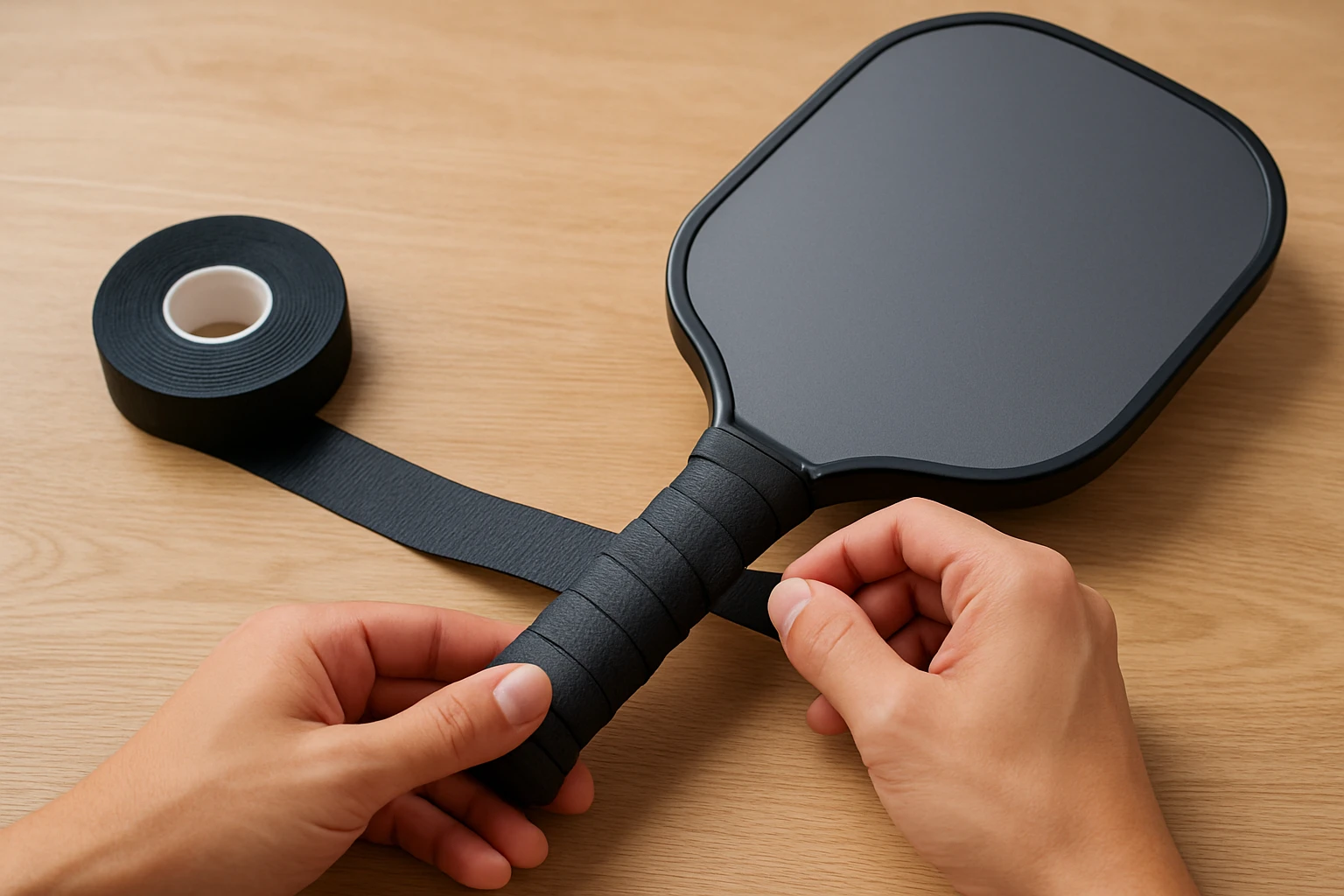
Once the handle is clean and dry, the most effective method to combat slipping is to apply a dedicated overgrip. The Tip Grips Overgrip offers a cushioned, sweat‑resistant surface that feels dry to the touch even after prolonged play.
Key features include a durable, anti‑tack material that reduces hand fatigue, six color options for personal style, and a simple four‑step application process. The product costs $14.99 and holds a 4.4‑star rating from 321 reviews, indicating broad customer satisfaction. Applying this overgrip involves unrolling the tape, aligning it with the handle, wrapping tightly, and trimming excess material with scissors. The adhesive backing adheres securely without peeling, ensuring a long‑lasting solution.
Choosing an overgrip specifically engineered for moisture management is superior to generic tape because it incorporates engineered fibers that draw sweat away from the skin. This technology maintains a dry interface, which directly translates to improved control and reduced slippage.
Step 3: Reinforce with Grip‑Enhancing Tape (Optional)
For players who prefer an additional layer of security, a thin strip of grip‑enhancing tape can be applied over the overgrip at the palm region. This tape is typically made from silicone‑coated fabric, offering extra tack without compromising comfort. The tape should be cut to match the length of the palm area and applied with firm pressure.
The purpose of this optional layer is to provide a micro‑textured surface that increases friction between the hand and the grip. It is especially useful during intense rallies where sweat production spikes. However, it is not required if the overgrip alone meets the player’s needs.
Step 4: Adjust Hand Position and Grip Pressure
Even with the best grip material, improper hand placement can cause slippage. One should position the hand so that the thumb rests comfortably along the paddle’s shaft, while the fingers wrap around the handle with a relaxed yet firm pressure. This natural grip distributes force evenly and reduces the tendency for the hand to slide.
Practicing this hand position during warm‑up drills helps develop muscle memory, allowing the player to maintain a secure hold without excessive squeezing, which can increase fatigue. Proper ergonomics also prevent wrist strain during extended matches.
Step 5: Keep Hands Dry with Antiperspirant Powder
Applying a small amount of antiperspirant powder to the palms before play creates a dry barrier that absorbs moisture. The powder should be dusted lightly and shaken off any excess to avoid slipping on the court surface. Products containing aluminum chloride are especially effective at reducing sweat output.
This technique works in tandem with the moisture‑wicking overgrip, providing a dual‑action system: the powder absorbs sweat at the skin level, while the overgrip draws remaining moisture away from the handle. The combined effect significantly lowers the risk of slipping in humid conditions.
Step 6: Store the Paddle Properly
After each session, the paddle should be stored in a breathable bag rather than a sealed plastic case. A breathable environment allows any residual moisture to evaporate, preventing the grip from becoming saturated overnight. The bag should be kept in a cool, dry place away from direct sunlight.
Proper storage prolongs the life of both the paddle and the overgrip, reducing the frequency of replacement. It also prevents the development of unpleasant odors that can arise from trapped sweat.
Step 7: Perform Regular Maintenance
Periodic inspection of the grip surface ensures that wear does not compromise performance. One should examine the overgrip for signs of peeling, loss of tack, or fraying at the edges. If any of these issues are observed, the overgrip should be replaced promptly.
Replacing the overgrip every three to four months, depending on usage intensity, maintains optimal friction levels. The replacement process mirrors the original application steps, allowing the player to refresh the grip without professional assistance.
Tips & Pro Tips
- Test the overgrip on a practice paddle before using it in a tournament to ensure personal comfort.
- Rotate the paddle orientation during play to distribute wear evenly across the grip surface.
- Combine the overgrip with a hand‑drying towel during breaks for maximum dryness.
- Consider using a small fan or dehumidifier in indoor practice areas to reduce ambient humidity.
Troubleshooting
Problem: Grip still feels slippery after applying the overgrip.
Solution: Verify that the handle was fully cleaned before application; residual oil can prevent adhesion. Re‑clean the handle, allow it to dry completely, and reinstall the overgrip.
Problem: Overgrip begins to peel after a few games.
Solution: Ensure the adhesive side was pressed firmly for at least 30 seconds during installation. If the problem persists, replace the overgrip with a fresh unit.
Conclusion
The guide has presented seven actionable steps that enable a player to stop paddle grip slipping in humid weather. By cleaning the handle, applying a moisture‑wicking overgrip, optionally reinforcing with tape, adjusting hand position, using antiperspirant powder, storing the paddle properly, and performing regular maintenance, one can achieve a consistently secure hold. Implementing these practices will improve performance, reduce hand fatigue, and extend equipment lifespan.
Readers are encouraged to experiment with the recommended techniques and adopt the ones that best suit their playing style. A reliable grip is a foundational element of success on the pickleball court.
Products Mentioned in This Guide
Frequently Asked Questions
Why does my paddle grip slip in humid weather?
Sweat and moisture saturate the grip material, reducing friction and causing loss of control.
How can I clean a slippery paddle grip?
Wipe the grip with a microfiber cloth dampened with isopropyl alcohol or a mild soap solution, then let it dry completely.
What inexpensive method helps prevent grip slip?
Apply a thin layer of anti‑sweat powder or hand‑friendly antiperspirant to the grip before playing.
When should I replace my paddle grip with an overgrip?
Replace it when the original grip is worn, retains moisture, or after several weeks of heavy use in humid conditions.
What are the benefits of using the Tip Grips Overgrip?
It offers moisture‑wicking properties, enhanced anti‑slip texture, and durability while remaining cost‑effective.