Introduction
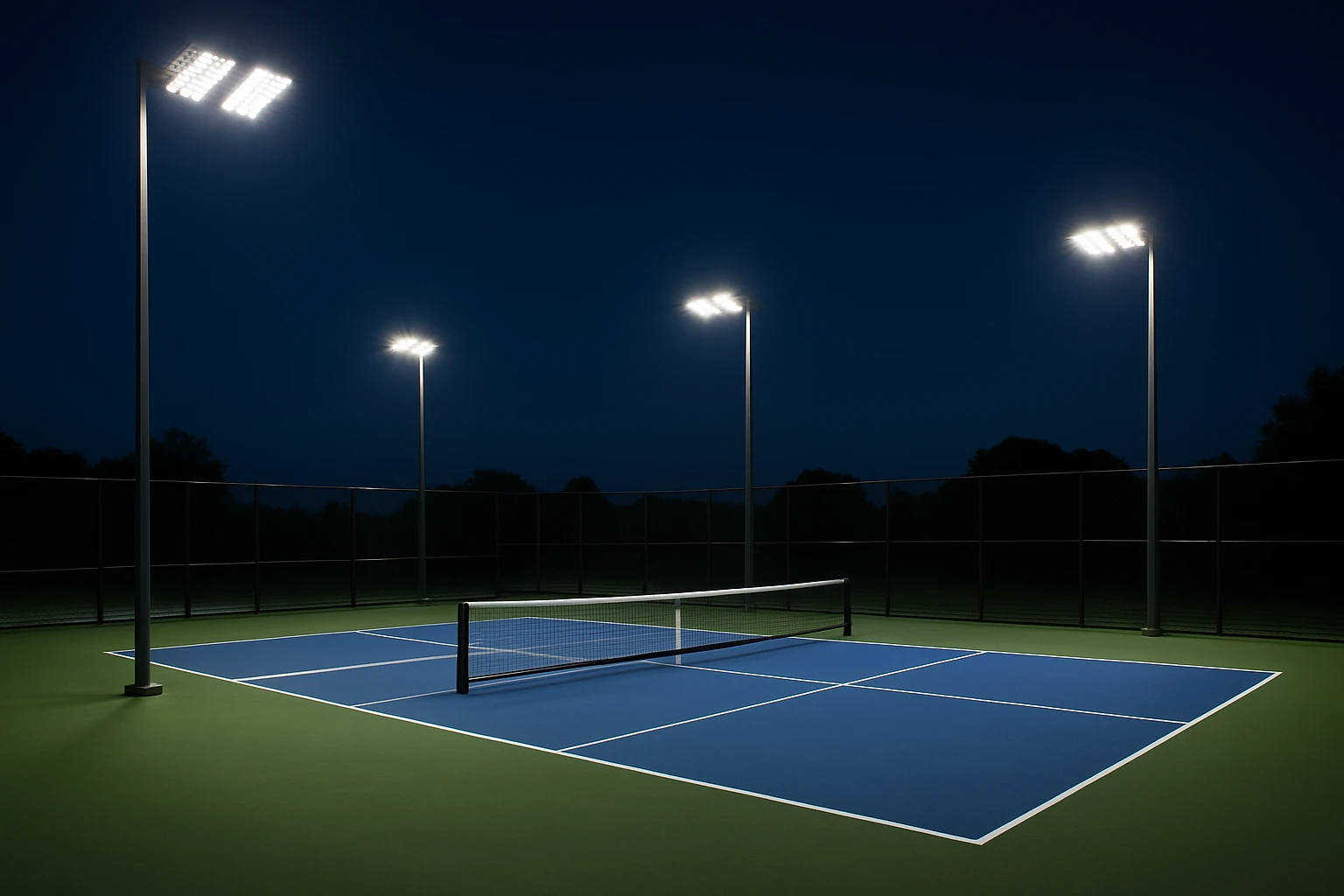
Pickleball has become one of the fastest growing sports in the United States, and many facilities are extending play into the evening hours. Proper illumination is essential to maintain player safety, ensure accurate ball visibility, and comply with local lighting regulations. This guide explains the scientific basis of court lighting, outlines the decision‑making process for selecting LED fixtures, and provides step‑by‑step installation advice. Readers will also discover four highly rated products that can satisfy a range of budgetary and performance requirements.
Background and Context
Effective court lighting must deliver sufficient luminous flux, uniform distribution, and appropriate color temperature while minimizing glare and light pollution. Luminous flux, measured in lumens, quantifies the total amount of visible light emitted by a source; a standard pickleball court typically requires between 30,000 and 50,000 lumens per side for competitive play. Uniformity is expressed as the ratio between the brightest and darkest points on the playing surface; a ratio of 1.5 : 1 or better is considered acceptable for night matches. Color temperature around 5,000 K replicates daylight, helping players track the fast‑moving ball without color distortion.
LED technology has replaced traditional metal‑halide and high‑pressure sodium fixtures because it offers higher energy efficiency, longer lifespans, and instant start‑up. Energy efficiency is reported in lumens per watt (lm/W); modern stadium LEDs can exceed 130 lm/W, translating into substantial utility cost savings. Moreover, LED modules generate far less heat, reducing the need for complex cooling systems and allowing fixtures to be mounted at higher elevations.
Regulatory bodies such as the Illuminating Engineering Society (IES) and local zoning agencies often require compliance with glare‑control standards and light‑spill limits. Failure to meet these standards can result in fines or community opposition. Therefore, selecting fixtures with precision optics and appropriate IP (Ingress Protection) ratings is a critical part of the planning process.
Understanding Light Requirements for Pickleball Courts
The first step in designing a lighting system is to calculate the required illuminance level, measured in lux. For recreational play, the IES recommends a minimum of 300 lux on the playing surface, while professional tournaments may demand 500 lux or more. To achieve these levels, one must consider the mounting height, beam angle, and the number of fixtures required.
Beam angle determines how widely light is spread; a narrower angle concentrates light and reduces spill, whereas a wider angle provides broader coverage but may increase glare. For high‑mast installations, a 45‑degree to 60‑degree beam angle is common because it balances coverage and uniformity. Mounting height typically ranges from 15 ft for portable poles to 30 ft for permanent stadium structures; higher mounting reduces the number of fixtures but may require higher output per fixture.
Energy consumption should be projected over the anticipated operating hours per year. For example, a 600 W LED fixture operating 4 hours per night for 200 nights consumes 480 kWh annually. At an average electricity rate of $0.13 per kWh, the yearly cost would be approximately $62, compared with a 1,500 W metal‑halide fixture that could cost three times as much.
Finally, the lighting design must incorporate control systems such as dusk‑to‑dawn sensors or programmable dimmers to further reduce energy use when the court is not in use.
Choosing the Right LED Flood Light
When evaluating fixtures, three performance categories dominate the decision: luminous efficacy, optical precision, and durability. High luminous efficacy reduces operating costs, optical precision minimizes glare for athletes, and durability ensures long‑term reliability in outdoor environments.
- Luminous Efficacy – Measured in lm/W, higher numbers indicate more light output per watt of electricity. The OSTEK 600W Stadium Light delivers 130 lm/W, equivalent to a 1,500 W metal‑halide fixture while consuming only 600 W.
- Optical Precision – Custom lenses or prismatic optics focus light onto the court and prevent spill onto neighboring properties. Both the OSTEK and the Xapolu 600W Dimmable Stadium Light employ precision optics designed for glare‑free illumination.
- Durability – An IP66 rating guarantees protection against dust and powerful water jets, while robust aluminum housings resist corrosion. All four products listed in this guide meet or exceed the IP66 standard.
Budget‑conscious facilities may opt for a lower‑wattage unit such as the STASUN 200W Flood Light, which provides 30,000 lumens at a price point under $90. Although its efficacy is slightly lower, the unit remains suitable for smaller courts or supplemental lighting.
For venues that require automated operation, the STASUN 300W Dusk to Dawn Flood Light integrates a photocell sensor that activates the fixture at dusk and deactivates at dawn, delivering up to 100 lm/W while eliminating manual control.
Installation Considerations
Proper installation begins with a site survey to verify pole height, structural load capacity, and electrical service availability. Most high‑mast fixtures are designed for a 1:1 retrofit, meaning they can replace existing lamps without modifying the pole or cross‑arm. The OSTEK 600W Stadium Light, for example, advertises a direct‑replacement capability that saves an estimated $8,000 in engineering and demolition costs.
Electrical wiring must be sized to handle the fixture’s maximum current draw, and all connections should be made in accordance with the National Electrical Code (NEC). A dedicated circuit with a suitable breaker protects the system from overloads. Many LED fixtures operate on a wide voltage range (100‑277 V), simplifying compatibility with existing infrastructure.
Mounting hardware typically includes a U‑shaped bracket that permits tilt adjustments of 10‑30 degrees, enabling precise aiming of the light beam. The STASUN 300W model offers a 330‑degree side‑to‑side pivot and a 180‑degree up‑and‑down tilt, granting installers flexibility to eliminate shadows and achieve uniformity across the court.
After mechanical installation, a photometric survey should be conducted using a lux meter to confirm that the achieved illuminance meets the design target. Adjustments to tilt angle or fixture spacing can be made at this stage before finalizing the system.
Optimizing Lighting Performance
Once the fixtures are installed, ongoing optimization can further enhance player experience and reduce operational costs. Dimming controls allow facility managers to lower output during practice sessions, which typically require less illumination than competitive matches. The Xapolu 600W Dimmable Stadium Light supports dimming via standard 0‑10 V or DMX interfaces, providing granular control over light levels.
Regular cleaning of the lens surface preserves optical efficiency; dust accumulation can reduce luminous output by up to 10 percent. Because all featured fixtures possess an IP66 rating, they can be washed with low‑pressure water without compromising the enclosure.
Implementing a maintenance schedule that inspects cooling fans, power supplies, and mounting hardware every 12‑24 months can prevent unexpected failures. The OSTEK and Xapolu units each carry a five‑year warranty, reflecting confidence in long‑term reliability.
Finally, consider integrating the lighting system with a centralized building management platform. Such integration enables automated scheduling, remote diagnostics, and energy usage reporting, which together can extend the lifespan of the fixtures and improve return on investment.
Comparison and Selection Guide
| Feature | OSTEK 600W Stadium Light | STASUN 200W Flood Light | Xapolu 600W Dimmable Stadium Light | STASUN 300W Dusk‑to‑Dawn Light |
|---|---|---|---|---|
| Lumens | 84,000 LM | 30,000 LM | 93,000 LM | 30,000 LM |
| Efficiency (lm/W) | 130 lm/W | 150 lm/W (approx.) | 155 lm/W | 100 lm/W |
| Beam Angle | 45°‑60° | Adjustable | 45° | Adjustable 3‑head |
| IP Rating | IP66 | IP66 | IP66 | IP66 |
| Voltage Range | 100‑277 V | 100‑277 V | 277‑480 V | 100‑277 V |
| Warranty | 5 years | 2 years | 5 years | 2 years |
| Price (USD) | $675.99 | $89.99 | $509.99 | $113.04 |
| Average Rating | 5 / 5 (0 reviews) | 4.6 / 5 (834 reviews) | 4.4 / 5 (9 reviews) | 4.4 / 5 (822 reviews) |
Facilities that prioritize maximum illumination and long‑term cost savings should consider the OSTEK or Xapolu 600 W models, both of which exceed 80,000 lumens and provide superior efficacy. For smaller community courts with limited budgets, the STASUN 200 W Flood Light delivers adequate brightness at a fraction of the cost. The STASUN 300 W Dusk‑to‑Dawn Light is ideal for venues that require automated operation and prefer a multi‑head design to cover irregularly shaped areas.
Best Practices & Tips
- Perform a lighting audit using a professional photometric analysis before selecting fixtures.
- Choose fixtures with a minimum efficacy of 130 lm/W to ensure energy efficiency.
- Prefer models with precision optics to reduce glare and meet local light‑spill regulations.
- Utilize dusk‑to‑dawn sensors or programmable dimmers to minimize unnecessary electricity consumption.
- Schedule semi‑annual cleaning of lenses and inspection of mounting hardware to maintain performance.
- Document all electrical connections and keep warranty information readily accessible for future service calls.
Frequently Asked Questions
What lux level is required for safe night pickleball?
For recreational play, a minimum of 300 lux on the playing surface is recommended, while competitive tournaments often require 500 lux or higher.
Can LED fixtures be retrofitted onto existing poles?
Yes, many high‑mast LEDs, including the OSTEK 600W Stadium Light, are designed for 1:1 retrofit, allowing direct replacement of legacy lamps without structural modifications.
How does beam angle affect glare?
A narrower beam angle concentrates light on the court and reduces spill, which in turn lowers the potential for glare that can distract players.
Are there tax incentives for installing energy‑efficient lighting?
In many jurisdictions, commercial property owners can claim tax credits or rebates for upgrading to LED lighting that meets ENERGY STAR or DLC criteria.
What maintenance is required for LED stadium lights?
LED fixtures generally require only periodic cleaning of the lenses and visual inspection of the mounting hardware; most manufacturers offer warranties of five years or more.
Do I need a professional electrician for installation?
Because the fixtures operate on standard commercial voltages and many include plug‑and‑play wiring, a qualified electrician can complete the installation safely and in compliance with local codes.
How can I reduce electricity costs further?
Integrating dimming controls, using dusk‑to‑dawn sensors, and selecting fixtures with high lumens‑per‑watt ratings are the most effective strategies for reducing operational expenses.
Conclusion
Selecting the appropriate LED lighting system for a pickleball court involves understanding illuminance requirements, evaluating fixture efficacy, and planning a reliable installation. By applying the concepts presented in this guide, facility managers can achieve uniform, glare‑free illumination while reducing energy consumption and maintenance costs. The featured products illustrate a range of options from high‑output stadium lights to cost‑effective flood lights with built‑in sensors. Implementing best‑practice maintenance and leveraging control technologies will ensure that the court remains safe and inviting for night play for years to come.
Products Featured in This Guide
OSTEK 600W Stadium Light
Price: $675.99 | Rating: 5/5 (0 reviews)
Featured for its 84,000 lumens output, 130 lm/W efficiency, precision glare‑free optics, and 5‑year warranty, making it ideal for large high‑mast installations.
STASUN 200W Flood Light
Price: $89.99 | Rating: 4.6/5 (834 reviews)
Featured for its affordable price, 30,000 lumens output, wide voltage compatibility, and ETL certification, suitable for small courts and supplemental lighting.
Xapolu 600W Dimmable Stadium Light
Price: $509.99 | Rating: 4.4/5 (9 reviews)
Featured for its 155 lm/W efficiency, dimmable capability, rugged aluminum housing, and 5‑year warranty, providing a versatile solution for variable lighting needs.
STASUN 300W Dusk to Dawn Flood Light
Price: $113.04 | Rating: 4.4/5 (822 reviews)
Featured for its integrated photocell sensor, 100 lm/W efficiency, adjustable three‑head design, and 2‑year warranty, ideal for automated, energy‑saving installations.
Frequently Asked Questions
What lumen range is recommended for a competitive pickleball court?
A competitive court typically needs 30,000‑50,000 lumens per side to ensure adequate visibility.
How is lighting uniformity measured and what ratio is acceptable?
Uniformity is the brightest‑to‑darkest point ratio on the surface; a ratio of 1.5 : 1 or better is considered acceptable.
Why is a 5,000 K color temperature preferred for night pickleball play?
Around 5,000 K mimics daylight, improving ball visibility and reducing eye strain for players.
What are key factors when selecting LED fixtures for a pickleball court?
Consider total lumens, uniform distribution, color temperature, glare control, and energy efficiency.
How can I minimize glare and light pollution when installing court lighting?
Use fixtures with proper shielding, aim lights downward, and choose LEDs with low glare ratings and precise optics.