How to Mitigate Wind on Portable Backyard Pickleball Courts: Proven DIY Methods to Windproof, Stabilize, and Improve Play
Introduction
Wind can disrupt the trajectory of a pickleball, reduce player confidence, and shorten the enjoyment of a backyard match. This guide explains practical, do‑it‑yourself techniques that reduce wind impact, increase net stability, and create a more reliable playing surface. Readers will learn how to assess wind patterns, apply inexpensive anchoring solutions, and select portable equipment that resists gusts without compromising portability.
The methods presented are based on engineering principles, field experience, and product specifications from reputable manufacturers. By following the steps, one can transform a breezy yard into a functional court that supports both casual games and competitive practice.
What You'll Need
- Portable net system (e.g., Hoverphenix 22FT Portable Pickleball Net or Fostoy 2-in-1 Pickleball Net with Wheels)
- Ground anchors or sandbags (minimum 30 lb each)
- Heavy‑duty rope or ratchet straps
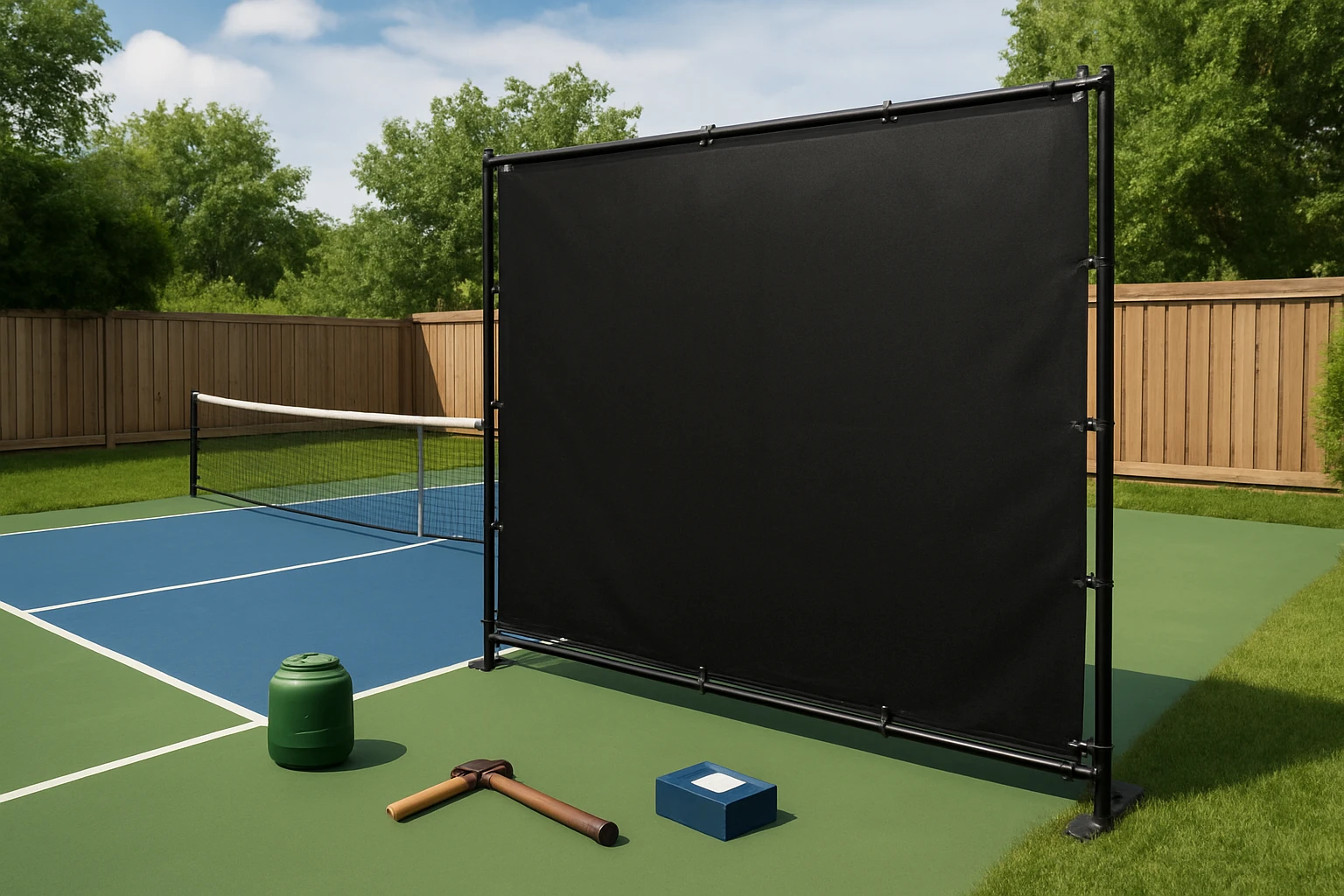
- Windbreak panels or PVC fence sections
- Measuring tape, level, and marker stakes
- Optional: protective footwear such as Lavley Funny Pickleball Socks for better footing on wet surfaces
Step 1: Evaluate Site Wind Direction and Speed
Before installing any equipment, observe the prevailing wind for at least two days. Use a handheld anemometer or a simple wind‑vane made from a flag attached to a pole. Mark the dominant direction with spray paint on the ground. Understanding the wind pattern allows you to position the net so that the open side faces away from the strongest gusts, reducing the force exerted on the net frame.
During this assessment, note any nearby structures that naturally block wind, such as a garage wall or a fence. These can serve as permanent windbreaks, reducing the need for additional panels.
Step 2: Choose the Appropriate Net System
The net itself must possess a sturdy frame and a tension‑adjustable mesh. The Hoverphenix 22FT Portable Pickleball Net offers a steel frame with a wide base and a fiberglass center pole that enhances stability in windy conditions. Its 15‑ply PE net resists tearing, and the adjustable tension straps keep the mesh taut, preventing sagging during gusts. Priced at $69.99, it holds a rating of 4.7 out of 5 from 121 reviewers, indicating reliable performance.
Alternatively, the Fostoy 2-in-1 Pickleball Net with Wheels features a 1 mm thick metal frame, six caster wheels for easy relocation, and an 18‑ply PE net that offers 20‑50 % greater load capacity than standard nets. Its wheels allow quick repositioning after a storm, and the locking mechanism secures the frame when in use. Priced at $71.99 with a 4.5 rating from 130 reviews, it is a solid alternative for users who prioritize mobility.
Both products provide a 22‑ft regulation size and an 11‑ft half‑court option, enabling flexible configuration based on available space.
Step 3: Secure the Base with Anchors or Sandbags
Even the sturdiest frame can be lifted by sustained wind if the base is not anchored. Place two to four ground anchors at the corners of the net base, spacing them evenly along the wide footplate. If the soil is soft, drive the anchors at least 12 inches deep. Connect the anchors to the frame using heavy‑duty rope or ratchet straps, tightening until the net does not wobble when the wind is simulated by a garden hose.
When anchors are unavailable, use sandbags filled with at least 30 lb of sand. Position each sandbag directly under the steel footplate and secure it with a strap. The added mass counteracts uplift forces and prevents the net from tipping.
For the Hoverphenix net, the wide base combined with anchored straps reduces the need for additional weight, but adding sandbags improves safety on sloped lawns. For the Fostoy net, the wheels must be locked before anchoring to avoid movement.
Step 4: Install Supplemental Windbreaks
Portable windbreak panels made from PVC or heavy canvas can be placed on the windward side of the court. Position panels 3 to 4 ft from the net to allow airflow while diminishing wind speed. Secure each panel to the ground with stakes and tie them together using rope to create a continuous barrier.
If a permanent fence exists, attach a lattice or mesh to the top half to diffuse gusts without obstructing visibility. Ensure that any windbreak does not trap wind against the net, as this could increase pressure on the frame.
When using the Hoverphenix net, the windbreak should be aligned with the net's central pole to distribute forces evenly. The Fostoy net's metal frame can accommodate additional clamps for attaching windbreaks directly to the side rails.
Step 5: Adjust Net Tension and Height
Proper tension is critical for wind resistance. Use the adjustable tension straps on either side of the net to raise the mesh until it is taut but not overstretched. A taut net reduces flutter, which otherwise acts like a sail. Verify the height with a level; the top of the net should be at the official 36‑inches for regulation play.
For the Hoverphenix net, the interlocking design allows quick tension adjustments without tools. The Fostoy net includes a similar strap system, but its 18‑ply mesh requires slightly more force to achieve optimal tautness.
After tensioning, test the stability by pulling the net sideways with moderate force. The frame should resist movement, indicating that the anchoring and tension are sufficient.
Step 6: Optimize Footwear and Surface Conditions
Players often slip on wet grass, which can lead to abrupt movements that destabilize the net. Wearing moisture‑wicking socks such as Lavley Funny Pickleball Socks improves grip and reduces the likelihood of sudden shifts that add extra load to the net. These socks are priced at $6.99, have a 4.6 rating from 349 reviewers, and feature a humorous design that enhances morale.
Additionally, lay a rubber mat or interlocking foam tiles on the playing area to provide a stable, non‑slippery surface. This measure is especially useful in regions with frequent dew or light rain.
Tips & Pro Tips
- Schedule play during early morning or late afternoon when wind speeds are typically lower.
- Use a portable weather station app to monitor real‑time gusts before setting up.
- When anchoring with sandbags, label each bag with the date of filling; sand can settle over time and lose weight.
- If the net must be moved frequently, invest in a quick‑release strap system that attaches to the anchors without untying knots.
- Consider adding a small flag to the top of the net; the flag acts as a visual indicator of wind direction and intensity.
Troubleshooting
Problem: The net continues to sway despite anchoring.
Solution: Increase anchor depth, add additional sandbags, and verify that tension straps are tightened to the maximum recommended setting. Check for gaps in windbreak panels and seal them.
Problem: The wheels on the Fostoy net rotate during play.
Solution: Engage the locking mechanism on each caster wheel. If the lock fails, apply a rubber brake pad to the wheel hub to increase friction.
Conclusion
Mitigating wind on a portable backyard pickleball court requires a combination of site assessment, proper equipment selection, anchoring, and supplemental windbreaks. By following the six steps outlined above, one can achieve a stable, wind‑resistant playing environment that enhances enjoyment and performance. Whether one chooses the Hoverphenix net for its steel frame and fiberglass pole or the Fostoy net for its mobility and reinforced mesh, both solutions provide reliable stability when paired with appropriate anchoring and windbreak strategies.
Implement these practices, monitor conditions, and adjust as needed to maintain a consistently playable court throughout the season.
Products Mentioned in This Guide
Frequently Asked Questions
How can I determine the prevailing wind direction in my backyard?
Observe lightweight objects or use a simple wind sock for a few days to identify the dominant direction and peak gust times.
What are the most effective DIY anchoring methods for a portable pickleball net?
Use ground stakes with tensioned ratchet straps, sandbags, or weighted base plates to secure the net posts firmly against gusts.
Can I use a windbreak without permanently altering my yard?
Yes, install removable fence panels, garden trellises, or heavy‑duty tarps on the windward side that can be taken down after play.
Which portable net models are designed to resist wind better?
Models like the Hoverphenix 22‑ft and Fostoy 2‑in‑1 include reinforced frames and tensioning systems that reduce sway in moderate breezes.
How do I maintain net tension during changing wind conditions?
Adjust the tension straps or add extra weight to the base as wind picks up, and release tension when the wind calms to avoid stress on the net.